Drain Smells in Nashville Homes: Causes & When to Worry
Smelly drains or sewer odor in your Nashville home? Learn the real causes, which ones are serious, and how professional diagnosis finds the source fast.
You walk into the kitchen and something smells off. A minute later it’s gone — or maybe it isn’t. Maybe it’s a bathroom that always smells faintly like a sewer no matter how much you clean. Maybe every time the laundry runs, a whiff of rotten egg drifts up from the floor drain.
A smelly drain isn’t just unpleasant. It’s a message. Sometimes the fix is a 30-second DIY. Other times the smell is the only warning you’ll get that something is going wrong inside a pipe you can’t see — and ignoring it can mean bigger damage, real health concerns, or both.
This guide walks through the most common causes of drain odors in Nashville homes, which ones are genuinely serious, how professional diagnosis actually finds the source, and when it makes sense to stop guessing and call someone who can see inside the pipe.
Common Causes of Drain Odors
Drain smells fall into a few distinct categories, and knowing which one you’re dealing with is most of the diagnosis. Some are almost trivial. Some indicate a problem that’s been developing quietly for months.
Dry P-Trap (Often an Easy Fix)
Every drain in your house has a curved section of pipe underneath it called a P-trap. It holds a small amount of water, and that water is what blocks sewer gases from rising up into your home. When a drain doesn’t get used for a while — a guest bathroom, a basement floor drain, a rarely-used utility sink — the water in the trap evaporates, and the seal disappears.
The result is exactly what you’d expect: sewer odor rising straight up through an unused drain. The fix is usually simple. Run water down the drain for 30 to 60 seconds to refill the trap. If the smell disappears within a day, you’ve found your answer.
If the smell comes back even after you’ve refilled it? The problem isn’t the P-trap.
Biofilm and Bacteria Buildup Inside Pipes
Every drain that handles organic matter — kitchen sinks, bathroom sinks, showers, garbage disposals — slowly develops a layer of biofilm on the inside of the pipe walls. It’s a mix of grease, soap scum, food particles, hair, and the bacteria that feed on all of it. Over time, this coating produces a sour, musty, or sulfurous smell that can waft up whenever water runs.
This is why a drain can smell bad even when it isn’t clogged. The odor isn’t coming from a blockage — it’s coming from what’s living on the pipe walls between clogs. Cleaning the drain opening won’t fix it, because the source is six feet down.
Blocked or Damaged Vent Pipe
This one catches people off guard: your plumbing system has vents. Every fixture in your house connects to a network of vertical vent pipes that run up through the roof, and those vents do two important things — they let sewer gases escape safely above your house, and they maintain the air pressure that keeps your P-traps sealed.
When a vent gets blocked (by leaves, bird nests, debris, or ice in winter) or damaged, the whole system starts misbehaving. You might hear gurgling. P-traps can get siphoned dry even when you’re using the drains normally. And sewer gas finds its way back into the house instead of going out the roof.
Vent issues are one of the most commonly misdiagnosed sources of persistent drain smells, because nothing looks wrong from inside the home.
Sewer Line Issues (Cracks, Root Intrusion, Bellied Pipe)
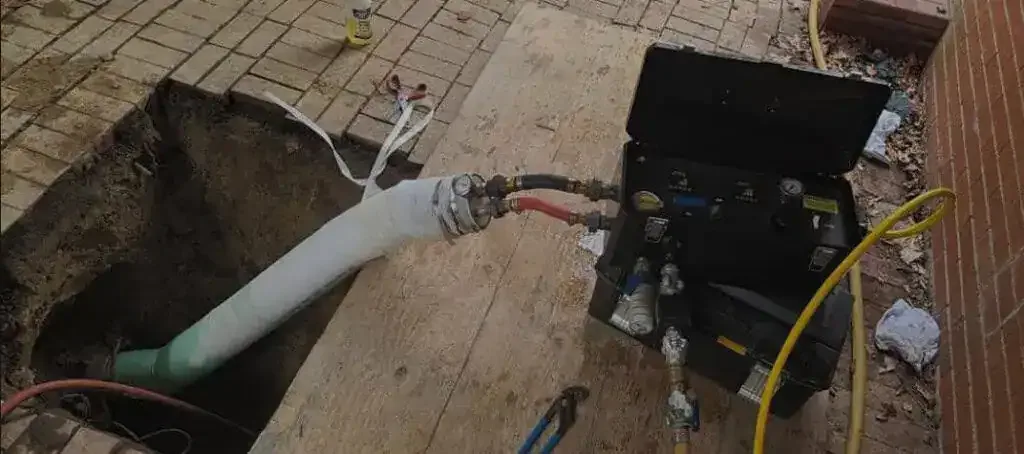
If the smell is persistent, sometimes affects multiple drains, and is accompanied by slow drainage or gurgling, the cause may be in the main sewer line itself. Cracks in the pipe, root intrusion, or a section of pipe that has sagged (a “belly”) can all allow waste to sit and decompose where it shouldn’t — producing a steady sewer odor that no amount of surface cleaning will touch.
This is the category where a smell stops being a nuisance and starts being a signal. The sooner this kind of issue is diagnosed, the smaller the eventual repair tends to be.
When a Smell Signals Something Serious
Most drain odors are benign. But certain combinations of symptoms are worth taking seriously. If any of these sound familiar, the smell isn’t just a smell — it’s telling you something.
The odor is persistent and doesn’t clear up after cleaning the drain opening, running water to refill traps, or basic household deodorizers. Persistent means the source isn’t near the surface. Something deeper is producing it continuously.
Multiple drains in the home are affected. A single smelly sink is usually a localized problem. But if the kitchen, one bathroom, and the laundry drain all smell — especially at the same time — the issue is likely in shared plumbing: a main line, a venting problem, or something going on further downstream than a single fixture.
The odor comes with slow drainage or gurgling sounds. When you hear gurgling from a drain while another fixture is in use, or water drains sluggishly across the house, that’s a classic sign of a partial main line blockage or a venting failure. The smell is a byproduct.
You smell a strong rotten-egg odor that doesn’t go away. According to the Centers for Disease Control and Prevention, hydrogen sulfide — the gas responsible for sewer’s distinctive rotten-egg smell — can cause headaches, nausea, and eye irritation at higher concentrations. Low-level exposure in a home is rarely dangerous, but persistent strong odor is a sign sewer gas is getting in somewhere it shouldn’t, and the source needs to be identified.
How We Diagnose Drain Odors at Prodigy
The honest truth about drain odors is that you can’t fix what you can’t see. This is why the first step of any serious diagnosis isn’t cleaning — it’s looking.
CCTV Camera Inspection
A CCTV drain camera inspection is the single most useful tool for identifying the real source of a drain smell. A waterproof camera travels through the pipe, streaming live video that shows exactly what’s in there — biofilm coating, standing water in a bellied section, roots pushing through a joint, a crack leaking waste into surrounding soil. You see it on the screen the same time we do.
That removes the guessing. Instead of recommending “a cleaning” and hoping the smell goes away, we can point to the actual cause.
Smoke Testing for Vent Issues
When we suspect a venting problem, smoke testing is how we confirm it. Non-toxic smoke is introduced into the drain system, and we watch where it comes out. If smoke emerges anywhere other than the roof vents — a wall cavity, an unused drain, a crack in a pipe — we’ve found the leak point, and with it, the reason sewer gas has been getting into the house.
Matching the Fix to the Diagnosis
Once we know what’s causing the odor, the repair gets specific. Biofilm and grease coating inside pipes? Hydro jetting scours the full pipe interior, not just the center. Cracked or bellied sewer line? Trenchless repair from the inside. Vent issue? The blockage or damaged section gets cleared or replaced. Rarely-used drain with a dry trap? We show you the fix and save you the service call next time.
DIY vs Professional: When to Call for Help
Some drain smells genuinely are DIY-appropriate. Before calling anyone, it’s worth spending a few minutes on the obvious stuff:
- Run water down every drain — including ones you rarely use — for 30 to 60 seconds each to refill P-traps
- Clean visible biofilm around drain openings (the underside of sink stoppers and the visible inside of drain baskets can hold a surprising amount of gunk)
- Check garbage disposals for trapped food debris
- Pour a kettle of hot water, followed by a cup of baking soda and a cup of white vinegar, down smelly kitchen and bathroom drains — wait 15 minutes, then flush with more hot water
If the smell is gone after this, great — you had a surface-level issue and you fixed it yourself.
If the smell is still there a day later, or returns within a week, the source isn’t at the surface. That’s when a camera inspection earns its cost: it tells you whether you’re dealing with something minor like deep biofilm, or something that genuinely needs professional repair before it becomes a bigger problem. The U.S. Environmental Protection Agency tracks sewer system issues partly because problems inside the line don’t fix themselves — they compound.
Stop Smelling It. Find the Source.
A lingering drain smell is one of those problems where waiting doesn’t help. Biofilm thickens. Roots grow. Cracks widen. A small repair today is almost always cheaper than the same repair six months from now.
If a drain in your Nashville home smells and you’ve already tried the obvious fixes, Prodigy’s drain cleaning service starts with a camera inspection so you can see the actual source on a screen — then you get clear options, upfront pricing, and a fix that matches the real problem. No guessing. No unnecessary upsells.
Call (629) 276-6322 or schedule an inspection online. For active sewer gas odors or any backup emergency, our 24/7 emergency service is available around the clock.
Frequently Asked Questions
Why does my bathroom drain smell like rotten eggs?
A rotten-egg smell is hydrogen sulfide, one of the main components of sewer gas. The most common causes are a dry P-trap in a rarely-used drain, biofilm buildup inside the pipe, or a venting issue that’s allowing sewer gas to back up into the house. Start by running water down the drain for a full minute to refill the trap. If the smell returns within a few days, the source is deeper and worth having inspected.
Is sewer smell in the house dangerous?
At low concentrations, occasional sewer odor is unpleasant but not usually harmful. According to the CDC, higher concentrations of hydrogen sulfide can cause headaches, nausea, eye irritation, and respiratory issues. If the smell is strong, persistent, or accompanied by physical symptoms, it’s worth treating it as a real plumbing problem that needs to be identified and fixed — not masked.
Can a clogged drain cause a smell even if water still drains?
Yes. Partial blockages slow water flow and allow organic material to sit and decompose inside the pipe. You’ll notice the smell before you notice the clog, which is actually useful — catching it early, while water still drains, means a simpler cleaning instead of an emergency backup later. A camera inspection can confirm whether the odor is from a developing clog or something else.
Why does my drain smell worse in summer?
Warmer temperatures accelerate bacterial growth in biofilm buildup, so existing odors get stronger in summer months. Dry, hot weather also evaporates P-trap water faster, making unused drains more likely to let sewer gas through. If summer reliably brings the smell back, there’s a baseline problem in the pipe that warmer weather is amplifying.
How often should drains be professionally cleaned to prevent smells?
For most Nashville homes, annual professional cleaning is a reasonable cadence — and regular sewerage maintenance can prevent most odor and backup issues before they start. Homes with older pipes, mature trees, or a history of recurring clogs may benefit from more frequent service.
Get the Drain Flowing Again
Flat-rate drain cleaning from a licensed local crew, with a camera inspection included on any booked job so you know whether it will come back. Call or text (629) 276-6322.