Why Do My Drains Keep Clogging? (Nashville Homeowner Guide)
Recurring drain clogs in Nashville? Learn the real causes, why quick fixes fail, and how to actually fix it for good. Honest advice from local pros.
You cleared the clog last month. Maybe you snaked it yourself. Maybe you paid a plumber. Either way, the water drained, and for a few weeks everything felt normal.
Now it’s happening again.
If your drains keep clogging no matter what you do, you’re not imagining things — and you’re not failing at homeownership. Recurring clogs almost always mean there’s something deeper going on that a quick fix simply can’t solve. The bad news is that chemical cleaners and surface-level snaking tend to make the pattern worse over time. The good news is that once you know what’s actually causing the backup, there’s usually a real, permanent fix.
This guide walks through the most common reasons Nashville drains keep clogging, why quick fixes rarely last, and what actually works when you’re ready to stop dealing with the same problem every few months.
The Most Common Causes of Recurring Drain Clogs
When a drain keeps backing up, the clog you see is rarely the clog you have. The blockage in your sink or shower is usually a symptom of something happening deeper in the pipe. These are the four causes we find most often in Nashville and Middle Tennessee homes.
Grease Buildup Inside Pipes
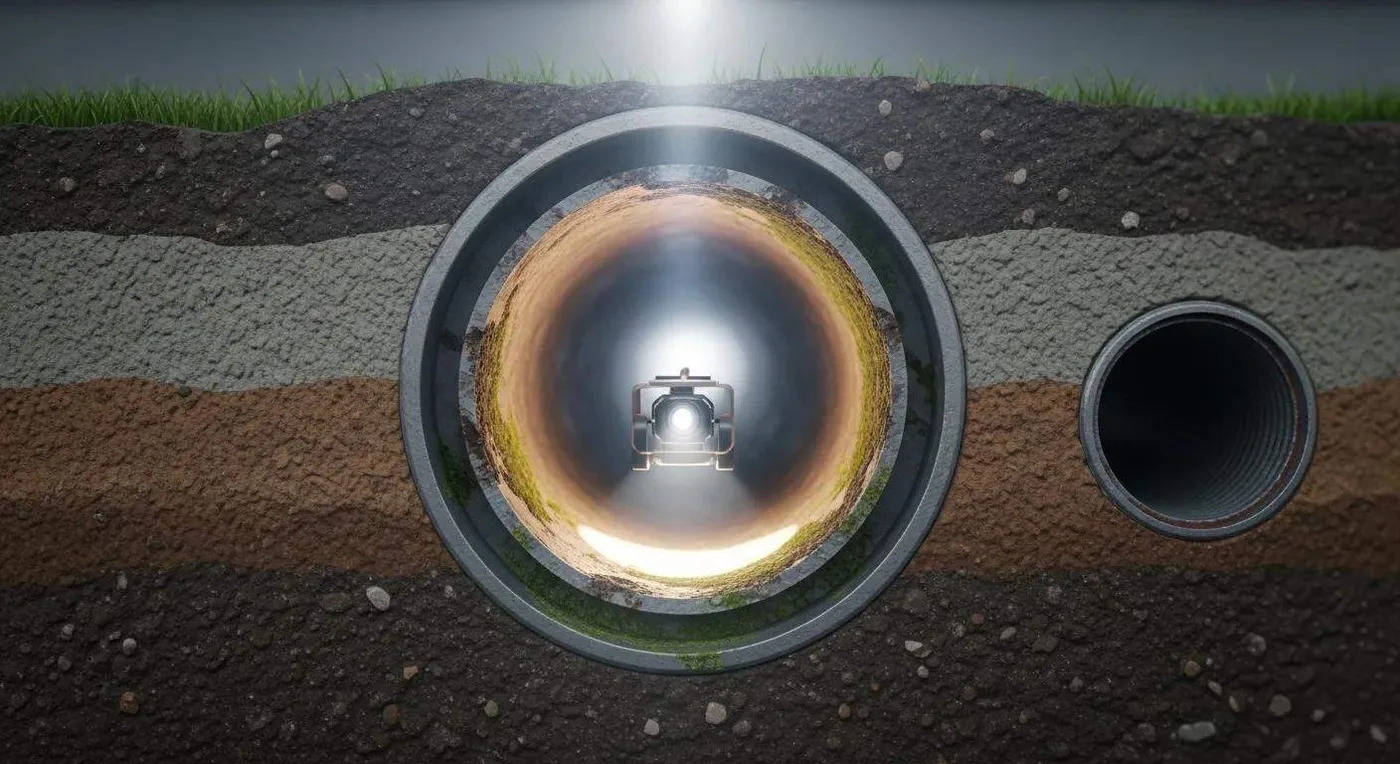
Even if you’re careful, small amounts of fats, oils, and grease go down your kitchen drain every day — from cooking, from rinsing dishes, from the garbage disposal. Warm grease flows fine, but as it cools inside the pipe, it hardens and sticks to the pipe walls. Over months and years, that layer thickens until water can barely squeeze through.
Metro Water Services in Nashville tracks this closely because grease buildup is one of the leading causes of sewer overflows in the city. Their ongoing fats, oils, and grease program exists specifically because so many residential backups trace back to this one cause.
Tree Root Intrusion
Middle Tennessee has a lot of mature trees — which is great for your yard and tough on your sewer lines. Tree roots are drawn to any moisture and nutrients escaping from pipe joints, and once they find a hairline crack, they grow inside. A few fine roots become a dense mat that catches paper, grease, and debris until the line chokes.
If your recurring clog is in a main line rather than a single fixture, and especially if you live in an older neighborhood with established trees, roots are one of the first things a camera inspection will check for.
Pipe Damage, Bellying, or Improper Slope
Pipes are supposed to run at a slight downward slope so gravity carries waste away. But soil shifts. Older cast iron corrodes and sags. Clay pipes crack. When a section of pipe develops a low spot — called a “belly” — water and solids collect there instead of flowing through, and you get recurring blockages in the exact same spot no matter how many times you clear them.
This is one of the most misdiagnosed causes of repeat clogs. Without a camera, there’s no way to see a belly from the cleanout.
Mineral and Scale Buildup in Older Pipes
Older galvanized steel and cast iron pipes — still common in homes built before the 1980s in parts of Nashville, Belle Meade, and Germantown — can develop internal scale buildup that narrows the pipe diameter over time. Once the usable opening shrinks enough, even small amounts of hair, soap, or food debris cause backups that keep coming back.
Why Quick Fixes Don’t Last
If the underlying cause is grease, roots, damage, or scale, a quick fix isn’t really a fix at all. It’s a delay. Here’s why the two most common DIY and low-cost responses rarely solve the problem.
Chemical Drain Cleaners: Temporary Relief, Long-Term Damage
Chemical drain cleaners punch a small channel through the clog so water flows again — but they don’t remove the buildup coating the rest of the pipe. Worse, the U.S. Environmental Protection Agency classifies most common drain cleaners as corrosive household hazardous waste because of what they do to pipes, skin, and plumbing fixtures. Repeated use can damage older metal pipes, soften PVC joints, and eat through rubber seals — so the “fix” eventually becomes the next, bigger problem.
If you’ve been pouring chemical cleaner down a recurring clog every few weeks, the drain isn’t getting cleaner. It’s getting weaker.
Basic Snaking Without Diagnosis: Clears the Symptom, Not the Cause
A standard cable snake is great for a simple, one-off clog — hair in a bathroom sink, a toilet blockage from too much paper. What it doesn’t do is clean the pipe walls or tell you why the clog formed in the first place.
When a plumber snakes a line that’s actually coated in grease or partially blocked by roots, they punch a hole through the middle of the blockage. Water drains again, the invoice gets paid, and a month or two later the hole fills back in. You call again. They snake it again. The cycle continues — and the real cause never gets identified.
How to Actually Fix Recurring Clogs for Good
Permanently fixing a recurring clog means doing two things most quick-fix plumbers skip: first, seeing what’s actually inside the pipe, and second, matching the repair to the real problem.
Step 1: Camera Inspection to Identify the Root Cause
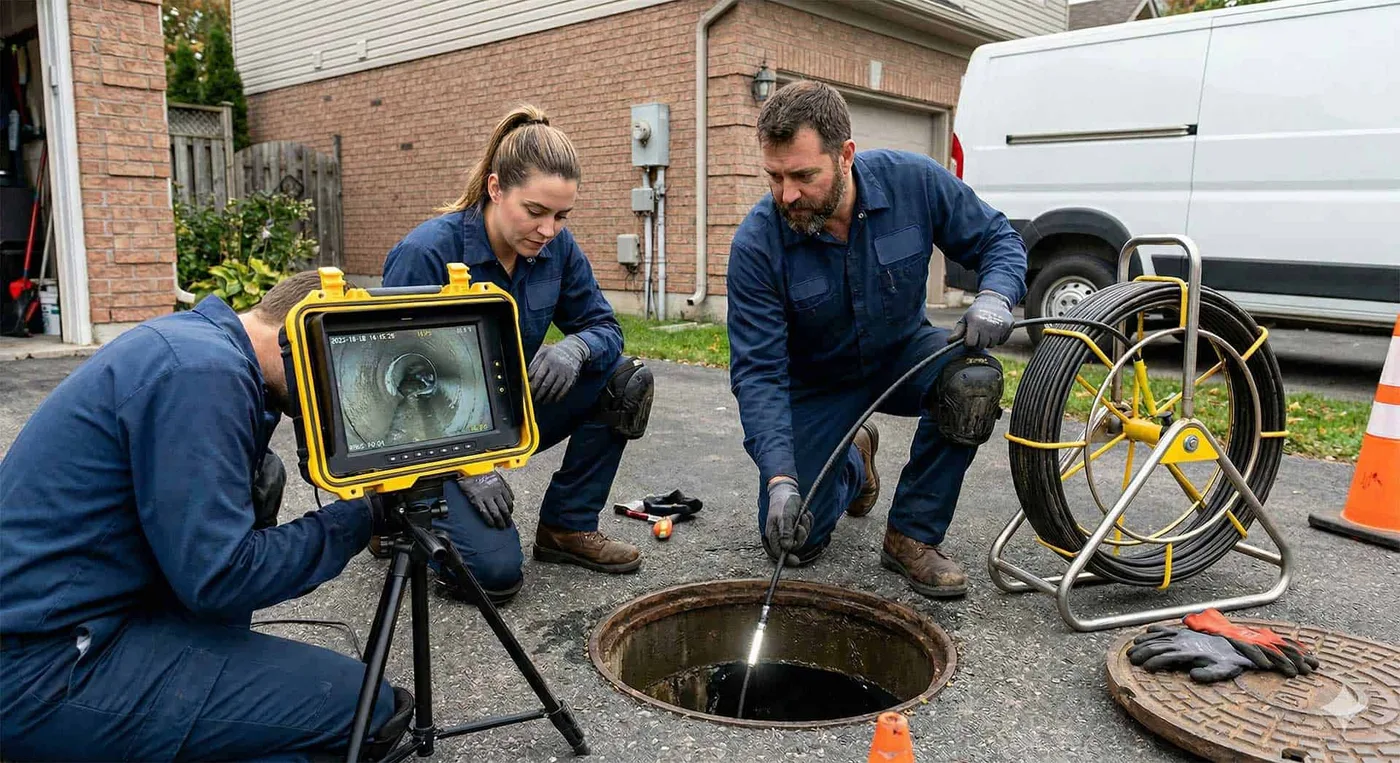
A CCTV drain camera inspection sends a waterproof camera down the line and shows you, in real time, exactly what’s happening. Grease coating? You’ll see it. Root intrusion? Visible and measurable. A bellied pipe or cracked section? You’ll see the water pooling right where the problem is.
This changes the entire conversation. Instead of guessing, you know — and the fix stops being one-size-fits-all.
Step 2: Hydro Jetting for Full Pipe Restoration
For grease, scale, and root intrusion that hasn’t yet damaged the pipe itself, hydro jetting is the real deal. High-pressure water streams (up to 4,000 PSI) scour the entire interior of the pipe — not just the center — removing buildup down to the original pipe wall. Unlike snaking, it restores the full pipe diameter, which is what actually stops the clog cycle.
Step 3: Trenchless Repair When the Pipe Itself Is the Problem
If the camera reveals structural damage — a belly, cracked section, or roots that have already broken through the pipe wall — cleaning alone won’t fix it. In the past, that meant digging up your yard. Today, cured-in-place pipe (CIPP) lining can repair the pipe from the inside, creating a new seamless pipe within the old one, usually without any excavation.
This is the difference between a repair that lasts decades and another snaking next spring.
When to Call a Professional in Nashville
Some drain clogs are genuinely one-offs you can handle yourself. But there are clear signs the problem is bigger than a plunger and some patience. Call a professional if you’re seeing any of these:
- The same drain clogs more than twice in six months
- Multiple drains back up at the same time (a sign of main-line trouble)
- You hear gurgling in other fixtures when water runs or a toilet flushes
- There’s a persistent smell even after cleaning
- You’ve already tried chemical cleaners or DIY snaking without lasting results
- Water backs up into a lower fixture (like a basement drain or shower) when you use something else
If you’re in Davidson or Williamson County and any of these sound familiar, it’s worth getting a camera inspection before you spend another weekend on it. At minimum, you’ll know what you’re actually dealing with.
Stop Guessing. Get a Real Answer.
Most Nashville homeowners we meet have already tried two or three things before they call. That’s not a problem — it just means they’ve earned the right to a real diagnosis instead of another temporary fix.
If your drains keep clogging, the next step isn’t another snaking. It’s finding out why. Prodigy’s drain cleaning service starts with a camera inspection so you can see the actual cause for yourself — then you get clear options, upfront pricing, and a fix that matches the real problem. No guessing. No upselling.
Call (629) 276-6322 or schedule an inspection online.
Frequently Asked Questions
Why do my drains keep clogging even after a plumber cleared them?
Because standard snaking clears a hole through the clog, not the pipe itself. If the underlying cause is grease buildup, tree roots, or a damaged pipe, the blockage rebuilds in the same spot within weeks or months. A camera inspection is the only way to identify the real cause, and hydro jetting or trenchless repair is usually what it takes to stop the cycle for good.
Can chemical drain cleaners damage my pipes?
Yes. Repeated use of corrosive chemical drain cleaners can weaken older metal pipes, degrade PVC joints, and damage rubber seals. They also don’t remove the coating that caused the clog in the first place — they just punch a hole through it. For recurring clogs, chemical cleaners typically make the long-term problem worse, not better.
How do I know if tree roots are in my sewer line?
Common signs include slow drainage across multiple fixtures, gurgling sounds, recurring main-line backups, and patches of unusually green grass over the sewer line. The only way to confirm root intrusion is a CCTV camera inspection, which also shows exactly how far into the pipe the roots have grown.
What's the difference between snaking and hydro jetting for recurring clogs?
Snaking uses a mechanical cable to break through a specific blockage — effective for simple, one-time clogs. Hydro jetting uses high-pressure water to scour the entire interior of the pipe, removing grease, roots, and scale buildup. For recurring clogs, hydro jetting addresses the full cause instead of just the symptom.
Is drain cleaning covered by homeowners insurance?
Routine drain cleaning and maintenance are almost never covered. However, if a sudden backup causes water damage inside your home, some of that damage may be covered depending on your specific policy. A licensed plumber can provide documentation for insurance claims.
Get the Drain Flowing Again
Flat-rate drain cleaning from a licensed local crew, with a camera inspection included on any booked job so you know whether it will come back. Call or text (629) 276-6322.