Basement Flooding in Nashville: What Do You Do First?
Quick Answer: Basement flooding Nashville what to do starts with safety: stay out of standing water until electrical, gas, and structural hazards are ruled out. Once the area is safe, shut off the water source, document the damage for insurance, and remove standing water within 24 to 48 hours to prevent mold. Prodigy Sewer & Drain then diagnoses the root cause with camera inspection and offers trenchless repair so the same flood doesn’t happen again.
A flooded basement in Nashville can turn a normal storm night into a race against the clock. Whether the water came from a sewer backup, a failed sump pump, or storm intrusion, the first hour matters as much as the first day. This guide walks through exactly what to do first for basement flooding in Nashville — the safety checks to make before anyone steps inside, the order to call professionals and your insurer, and how fast standing water needs to come out to avoid mold. It also covers what causes repeat flooding in Middle Tennessee homes and the steps that keep it from happening again.
Prodigy Sewer & Drain provides 24/7 emergency response across Nashville and the surrounding Davidson and Williamson County communities. We diagnose root causes — sewer backups, failing lines, and storm intrusion — with camera inspection, then apply trenchless repair for a lasting fix instead of a temporary patch.
Is It Safe to Enter Your Flooded Basement?
Safety comes before cleanup, full stop. We advise Nashville homeowners to stay out of standing water until electrical, gas, and structural hazards have been ruled out. Rushing into a flooded basement before checking these risks turns a plumbing problem into a life-threatening one.
Certain warning signs mean the basement stays off-limits. We tell every Nashville client not to enter if any of the following apply:
- Water is touching or near electrical outlets, panels, or wiring
- Structural elements — support beams, walls, or the foundation — show visible damage or shifting
- A gas odor is present anywhere near the flooded area
- The water source is unknown or still actively rising
What if outlets are underwater?
Standing water near outlets or electrical equipment turns a basement into a shock hazard. We recommend calling a licensed electrician to cut power at the main before anyone steps inside. Skipping this step risks serious injury, even in shallow water.
Should kids and pets stay away too?
Yes — children and pets belong nowhere near the flooded area until it’s confirmed safe. Contaminated water, sharp debris, and electrical risk make basements especially dangerous for them. During widespread flooding across Middle Tennessee, we also urge residents to follow guidance from Tennessee Department of Health emergency preparedness resources and local authorities before attempting entry. Our technicians assess these hazards on-site once conditions allow, so Nashville homeowners aren’t left guessing.
What Are the First Steps After Flooding?
Safety comes before cleanup once basement flooding in Nashville hits a property. We follow a clear priority order once the area is safe to enter: stop the water source, document the damage, call the insurer and appropriate professionals, then remove water and dry the space within 24 to 48 hours. Skipping that sequence costs Nashville homeowners time, money, and sometimes mold remediation bills that a faster response would have avoided.
Here is the order we recommend for anyone facing a flooded basement across Middle Tennessee:
- Confirm the area is safe to enter before doing anything else.
- Shut off the water source, whether that means a burst pipe, a failed sump pump, or a backing-up sewer line.
- Take photos and videos of the damage immediately, since this record becomes essential for the insurance claims process.
- Contact the homeowner’s insurance company right away, once documentation is complete, to start the claims and cleanup process.
- Call a licensed plumber to diagnose the source if the flooding traces back to a drain or sewer failure.
- Begin water removal and drying within 24 to 48 hours to limit structural and mold damage.
Who Should We Call First, a Plumber or Our Insurer?
Documentation and insurance notification come first in the immediate hours after discovery. Once that groundwork is laid, we recommend calling a plumber quickly if a sewer or drain issue caused the flood. Delays let standing water spread. Our team provides licensed, insured 24/7 emergency response across the Nashville area for exactly these emergencies. Basement flooding Nashville what to do guidance always starts with safety, then documentation, then a fast call to trusted professionals.
How Do You Remove Water and Dry It Out?
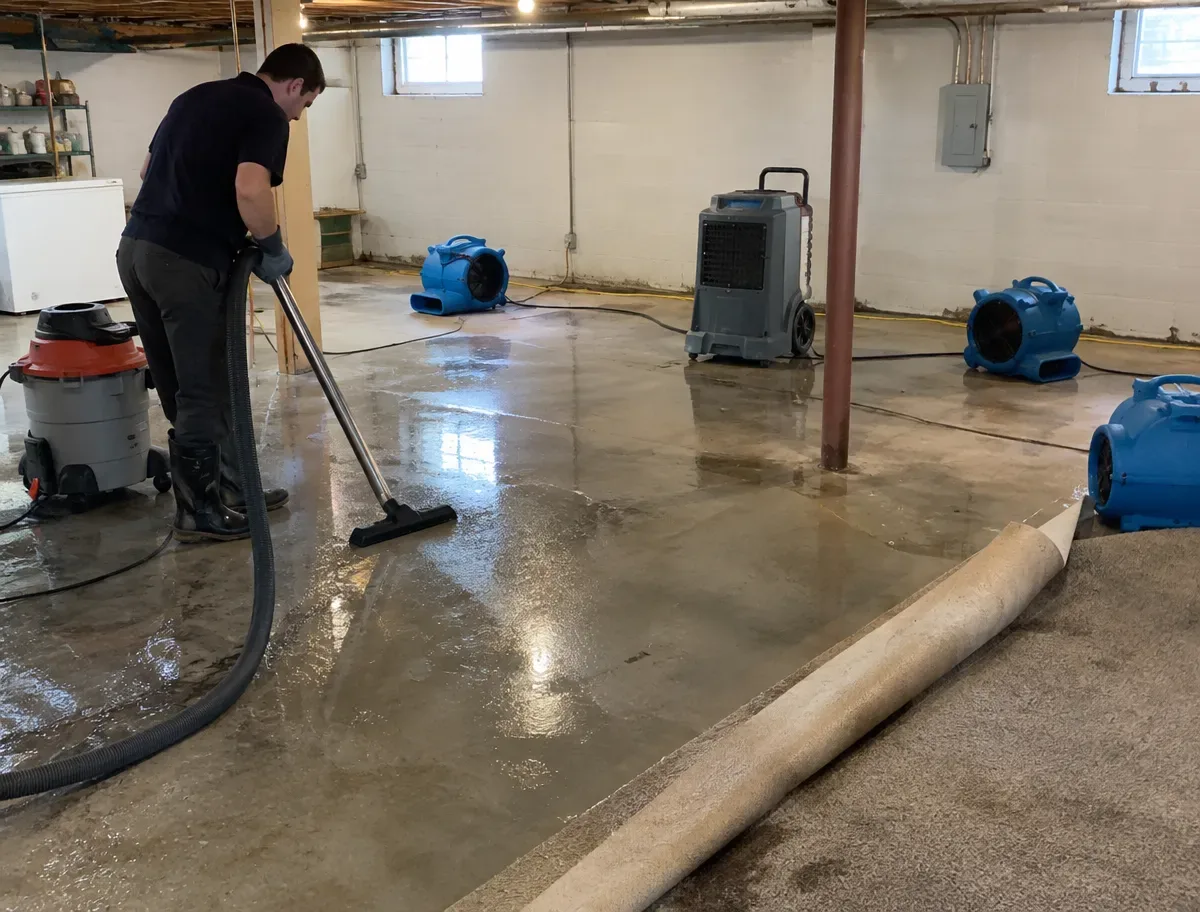
Removing standing water fast protects the structure of a Nashville home and the belongings stored below grade. We recommend completing water removal and drying within 24 to 48 hours whenever conditions allow, a window that limits mold growth and further damage to drywall, insulation, and flooring. Waiting longer turns a manageable cleanup into a much larger repair bill.
Once the source of water is controlled and the area is safe to enter, we walk Nashville homeowners through a clear extraction sequence that also protects indoor air quality — see the EPA’s guidance on flood cleanup and indoor air quality for more on why ventilation matters during drying:
- Remove standing water with a pump or wet vacuum, working from the lowest point of the basement outward.
- Pull out soaked carpet, padding, and any porous materials that cannot be fully dried.
- Run fans and dehumidifiers continuously to pull moisture from framing, subfloor, and concrete.
- Wipe down hard surfaces and check behind baseboards for trapped water.
- Monitor humidity levels over several days to confirm the space has actually dried, not just dried on the surface.
Why did the drain back up in the first place?
Drying the basement solves the visible problem, not the root cause. Our team diagnoses why the drain backed up in the first place, whether that’s a simple clog or a failing sewer line beneath the Nashville property. We offer the most comprehensive range of repair options in Middle Tennessee, matched to the specific condition of each system.
How do we know what’s actually wrong with the pipe?
After the water is out, we perform a camera drain inspection with PACP condition scoring to see exactly what’s happening inside the line. This step confirms whether the pipe qualifies for a trenchless repair or needs another approach. Skipping this diagnostic step leaves homeowners guessing, and guessing invites repeat flooding.
Ready to Get Started? If your Nashville basement has flooded more than once, the fix isn’t another shop-vac session — it’s finding out why. Schedule a camera inspection with Prodigy Sewer & Drain and get a clear diagnosis before the next storm rolls through Middle Tennessee.
How Can You Prevent Basement Flooding Next Time?
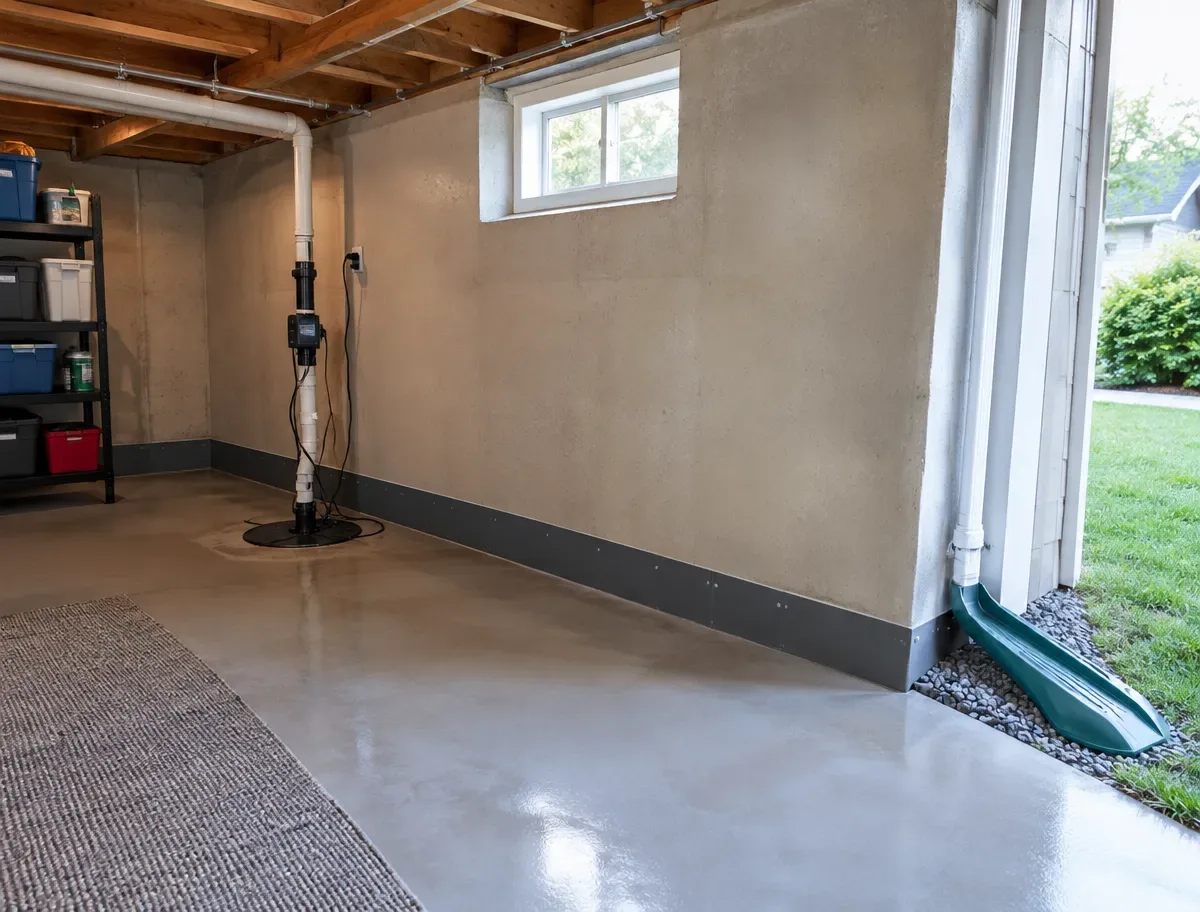
Prevention starts weeks before the first drop of rain falls, not after water reaches the baseboards. Nashville’s spring storms often arrive with little warning. We treat pre-storm preparation as part of our core operational philosophy: fix root causes early instead of reacting to emergencies. Two simple checks and one lasting pipe repair separate homes that flood repeatedly from those that stay dry.
What should Nashville homeowners check before a storm hits?
Preparation matters most in the days before a forecast calls for substantial rainfall, and it’s worth reviewing Nashville.gov’s stormwater management guidance for the city’s own flood-risk resources. We recommend two steps in this order:
- Confirm the sump pump is plugged in and running correctly. A pump that fails silently is worse than no pump at all, since homeowners assume protection they don’t actually have.
- Test carbon monoxide and smoke alarms. Storms frequently knock out power, and working alarms matter just as much as dry floors when the electricity goes out.
These checks take minutes but prevent the scramble that happens once water is already rising.
A pump that’s due for service is one of the fastest fixes on this list — our sump pump repair and installation service covers testing, repair, and battery backup options for Nashville homes.
Why does pipe lining prevent repeat basement flooding?
Sump pumps and alarms handle immediate storm risk. They don’t fix a cracked or root-invaded sewer line pushing water back into a Nashville basement every time it rains hard. That’s a structural problem, not a weather problem.
We address it with trenchless cured-in-place-pipe (CIPP) lining, which repairs cracks, root intrusion, and corrosion by forming a hard, jointless pipe-within-a-pipe rated for a 50-year design life, all without excavating the yard. As a certified Perma-Liner and MaxLiner installer, we match manufacturer-backed materials and curing methods to each home’s specific line. Knowing what to do about basement flooding in Nashville homes means pairing storm-day readiness with a permanent fix for the pipe that keeps letting water in.
What Mistakes Should You Avoid After a Flood?
Two mistakes cost Nashville homeowners the most time and money after a flood: wading into standing water too soon, and ignoring official guidance during a widespread storm event. We see both errors repeatedly across Middle Tennessee, and each one turns a manageable cleanup into a dangerous, drawn-out ordeal.
Standing water in a flooded basement often hides real electrical danger. Water may be touching outlets, electrical cords, appliances, or even the main electrical panel. That contact can energize the entire pool. We advise every homeowner to treat unknown floodwater as hazardous until a qualified electrician confirms the power is safely off.
Is it safe to enter my basement during a storm?
Not until local authorities confirm it. During widespread basement flooding, Nashville what-to-do situations involve more than one property. City guidance may include evacuation routes or shutoff instructions specific to the area. We recommend keeping children and pets away from the affected space entirely, and following posted instructions rather than personal judgment about water depth or clarity.
Other avoidable mistakes include:
- Delaying professional evaluation of the sewer or drain source behind the water
- Running electrical equipment near wet flooring before an inspection
- Assuming the water will recede without addressing the underlying pipe issue
As a Franklin, TN-based company serving Nashville and Middle Tennessee, we help homeowners identify the sewer and drain failures driving repeat flooding, so the same mistake doesn’t cost them again next storm season.
Frequently Asked Questions
Is it safe to enter a flooded basement right away?
No. Standing water must be checked for electrical, gas, and structural hazards first. Nashville homeowners should stay out until a professional confirms these risks are ruled out.
What should homeowners do first after a basement floods?
Confirm the area is safe to enter, then shut off the water source. Next, document the damage with photos and videos before contacting your insurance company.
How quickly should water be removed to prevent mold?
Standing water should be removed and the basement fully dried within 24 to 48 hours. Prodigy Sewer & Drain offers 24/7 response across Nashville and Middle Tennessee to help meet this window.
How can Nashville homeowners prevent basement flooding before it happens?
Test your sump pump before storm season and have a camera inspection done to catch cracked or root-invaded sewer lines early. Trenchless cured-in-place-pipe lining then fixes the root cause without excavation.
Does homeowners insurance cover basement flooding in Nashville?
Coverage depends on the cause and the policy, so document all damage with photos and videos and call the insurer right away. A separate flood policy is often needed for rising groundwater or storm surface water, while sewer backup damage typically requires its own endorsement.
TL;DR — Basement Flooding in Nashville at a Glance
- Stop the water source immediately, then document all damage within 24 hours for insurance claims.
- Remove standing water and dry your basement completely within 48 hours to prevent mold growth.
- Confirm electrical, gas, and structural hazards are ruled out before anyone enters a flooded basement.
- Test your sump pump before severe weather forecasts to ensure it operates properly when needed.
- A camera inspection identifies whether a failing sewer line — not just weather — is causing repeat flooding, and trenchless CIPP lining fixes it for up to 50 years.
- Next step: Contact Prodigy Sewer & Drain for a free inspection and stop the flooding cycle for good.
Get a Free Sump Pump & Drain Repair Quote
A flooded basement is stressful enough without guessing whether it will happen again. Prodigy Sewer & Drain diagnoses the real cause — sump pump, sewer line, or storm intrusion — and recommends the least invasive fix that actually lasts. Contact Prodigy Sewer & Drain today for a free, no-obligation quote.