Orangeburg Pipe Replacement in Franklin & Nashville, TN
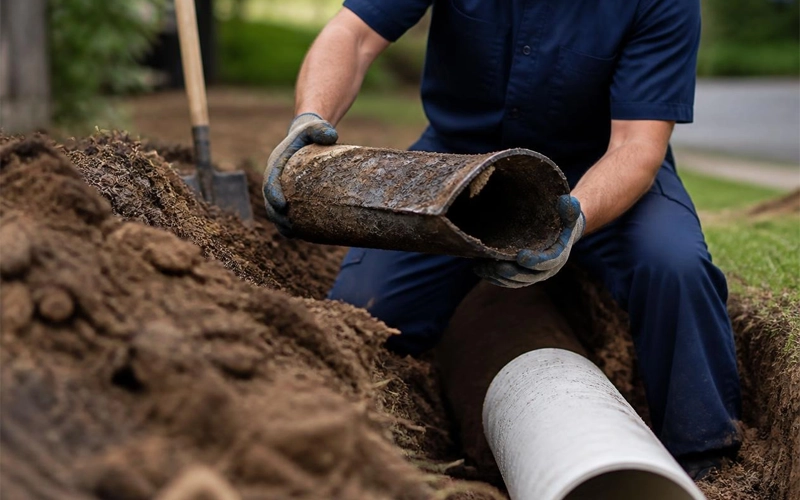
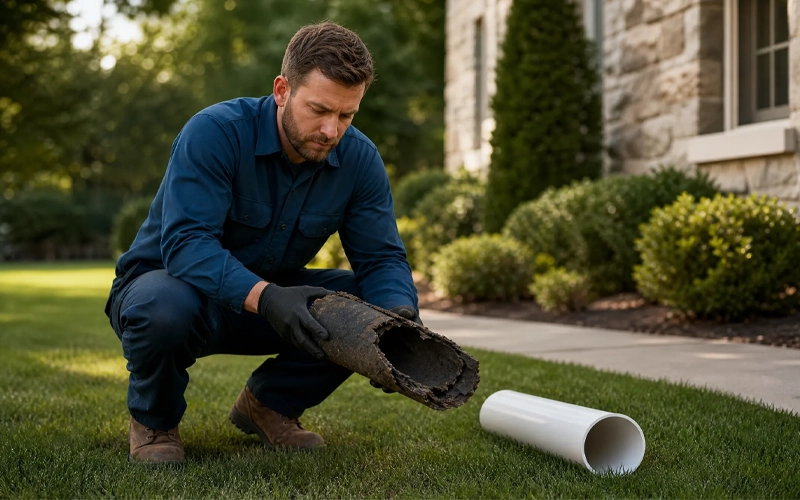
Orangeburg pipe replacement removes and replaces the bituminous fiber (tar paper) sewer pipe installed in many mid-century homes, which deforms, blisters, and collapses as it ages.
What It Is
Orangeburg cannot be lined because it loses its shape, so the only durable fix is to replace it — usually by trenchless pipe bursting, sometimes by excavation.
How It Works — Our Process
Our Orangeburg replacement process gets the failing pipe out:
A Camera Inspection
A camera inspection to confirm the pipe is Orangeburg and assess how far it has deformed
A Method Decision
pipe bursting when the line can still be navigated, excavation when it cannot
Permit Pull Where Required
Permit pull where required
Pulling New HDPE Pipe
Pulling new HDPE pipe through (bursting) or excavating and replacing the run
A Final Camera Pass
A final camera pass documented for your warranty file
When You Need It
Act quickly once a camera inspection identifies Orangeburg, because it continues to deform until it can no longer be navigated, forcing full excavation. Homeowners who discover Orangeburg during a pre-purchase inspection should treat it as an urgent replacement.
Pricing & Method Details
See the full hub for methods, pricing, and options.
Frequently Asked Questions
Can Orangeburg pipe be lined?
No. Orangeburg deforms and loses its round shape, so it cannot hold a CIPP liner. It must be replaced by pipe bursting or excavation.
How urgent is Orangeburg replacement?
Urgent. Orangeburg keeps deforming over time; the longer you wait, the more likely it collapses past the point where it can be burst, forcing more expensive open excavation.
How much does Orangeburg replacement cost?
Trenchless pipe bursting runs $150–$180 per linear foot; a traditional dig-and-replace is $8,000–$10,000 (80-ft typical residential, depending on depth, transitions, and fittings). We confirm the figure after the camera inspection.
How do I know if I have Orangeburg pipe?
Orangeburg was common in homes built roughly from the 1940s through the 1970s. A camera inspection identifies the material conclusively and shows how far it has deteriorated.
Find Out What Your Line Needs.
Every job starts with a free camera inspection so you see the real condition before any work. Call or text (629) 276-6322.