What Commercial Sewer Maintenance Should Nashville Property Managers Schedule Every Year?
Quick Answer: Most Nashville commercial properties benefit from an annual sewer camera inspection, hydro jetting roughly every 12 to 18 months, and a simple seasonal checklist covering grease traps, backflow devices, pumps, and root intrusion. Grease-heavy restaurant and cafeteria lines may need cleaning more often. Starting with a camera inspection shows what is actually in the line, so cleaning and any repairs target the real problem. A planned schedule usually costs less than reacting to backups, which can bring emergency call-out fees, tenant disruption, and business interruption. The right frequency depends on pipe age, tenant mix, and inspection findings.
A proactive commercial sewer maintenance schedule for Nashville property managers includes annual camera inspections and hydro jetting every 12 to 18 months for most properties. Prodigy Sewer & Drain’s NASSCO/PACP-certified technicians target blockages before emergencies occur. Waiting for a backup often costs more than a maintenance contract, and a planned schedule helps protect multi-tenant portfolios from tenant relocations and business interruption claims.
What's in This Post
- Why Schedule Commercial Sewer Maintenance in Nashville?
- What Tools and Inspections Do You Need First?
- How Do You Build a Seasonal Sewer Maintenance Schedule?
- What Are the Step-by-Step Commercial Sewer Maintenance Steps?
- How Can Property Managers Avoid Common Sewer Maintenance Mistakes?
- Frequently Asked Questions
- TL;DR at a Glance
- Related Resources
Why Schedule Commercial Sewer Maintenance in Nashville?
Scheduled commercial sewer maintenance helps prevent tenant relocations, business interruption claims, and emergency dispatch fees. Waiting for a backup often costs Nashville property managers more than a maintenance contract would.
Commercial sewer maintenance Nashville properties need demands scale, local knowledge, and minimal disruption. The city’s hospitality and healthcare properties see heavy, around-the-clock use, and food-service tenants send fats, oils, and grease down their lines every day. Metro Water Services’ environmental compliance and pretreatment section oversees the pretreatment program and grease interceptor and grease trap certifications, so property managers with food-service tenants should confirm current requirements with Metro Water Services directly.
What Happens When Maintenance Gets Deferred?
Property managers who wait for a sewer backup before scheduling maintenance often end up paying for tenant relocations, business interruption claims, and emergency dispatch fees. Together, these usually cost more than a planned maintenance contract.
How Often Should Nashville Properties Schedule Service?
For properties with 10 or more units or food-service tenants, an annual maintenance schedule is generally a better plan than waiting for repair calls. We recommend the following sequence:
- Schedule a camera inspection before any cleaning work.
- Target the actual blockage instead of guessing.
- Complete hydro jetting or mechanical rodding based on inspection findings.
- Document conditions for your records and budget planning.
When inspections reveal structural damage, our team can recommend trenchless sewer repair in Nashville options. We diagnose before we sell, so property managers can avoid paying for work the line doesn’t need.
What Tools and Inspections Do You Need First?
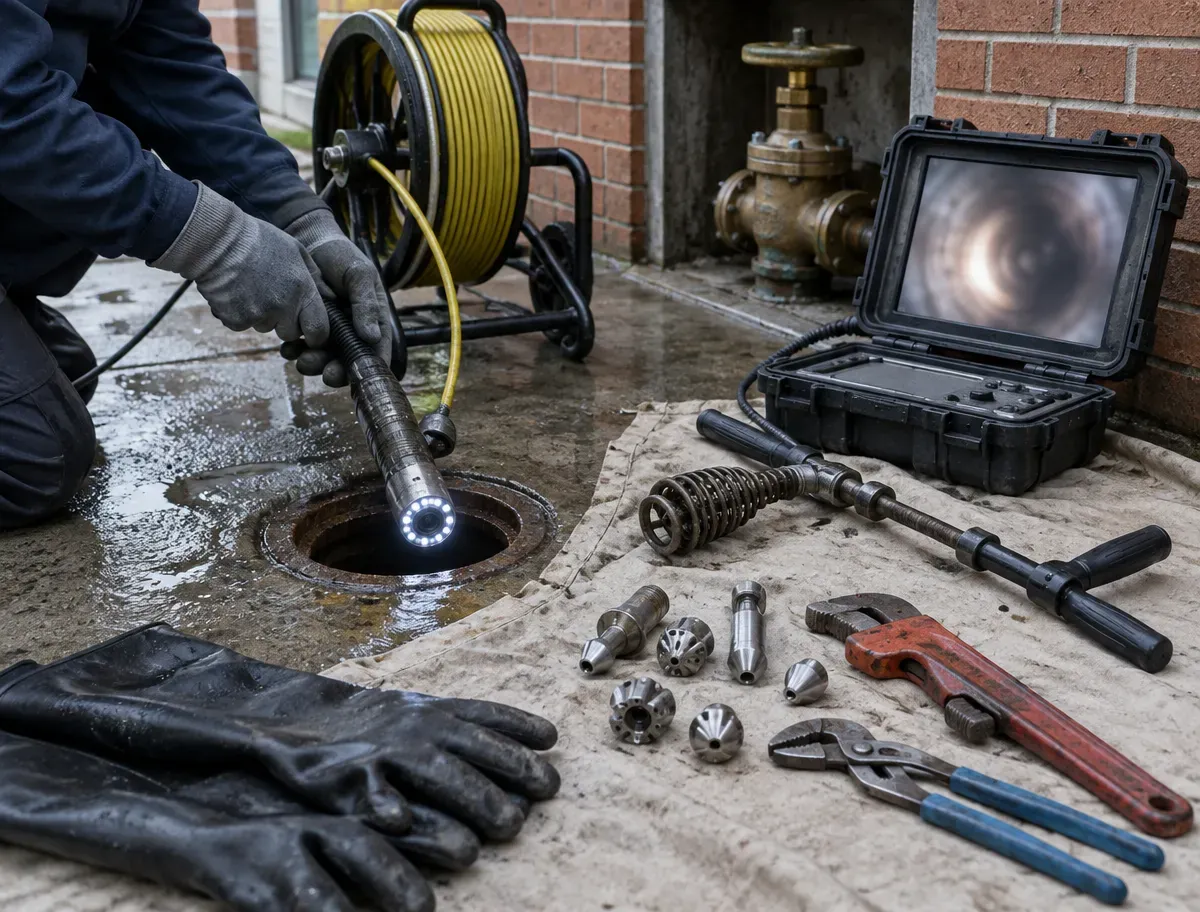
Effective commercial sewer maintenance Nashville starts with diagnostic tools, not drain machines. We diagnose before we sell. A sewer camera inspection pinpoints the blockage location and pipe condition before any cleaning begins. Guessing wastes your budget and your tenants’ patience.
Why Does a Camera Inspection Come Before Hydro Jetting?
A camera inspection before hydro jetting saves money by targeting the actual blockage instead of guessing. Our technicians run a high-resolution sewer camera through the line first. The footage shows whether grease, roots, scale, or a pipe collapse is causing the problem. We then match the right tool to the real issue.
What Does PACP Condition Scoring Tell Us?
A camera inspection with PACP condition scoring shows whether a pipe is a good candidate for cured-in-place pipe lining. The Pipeline Assessment Certification Program (PACP) standardizes defect coding so every stakeholder sees the same severity ratings. Without this score, a lining recommendation is just an opinion. With it, you get a data-backed repair scope that supports board review and capital planning.
How Does Hydro Jetting Compare to Mechanical Rodding for Commercial Lines?
Commercial hydro jetting generally clears grease and root intrusion more thoroughly than mechanical rodding on restaurant and multi-tenant lines. Rodding punches a hole through the clog but can leave residue on the pipe wall. Jetting scours the full diameter with high-pressure water, so grease-heavy kitchens and root-invaded laterals tend to stay clear longer after jetting.
Can Monitoring Technology Catch Problems Before a Backup?
Smart water meters track usage patterns and can detect anomalies that might indicate leaks. Building automation systems can flag pressure changes, temperature fluctuations, and flow irregularities in real time. Feeding these alerts into a preventive maintenance schedule helps catch a developing blockage during off-hours, before it turns into a 2 a.m. tenant call.
Ready to Put Your Sewer Lines on a Schedule? Prodigy Sewer & Drain builds commercial maintenance plans for Nashville properties, starting with a camera inspection. Book a commercial sewer inspection and get a documented baseline for your property.
How Do You Build a Seasonal Sewer Maintenance Schedule?
A seasonal maintenance schedule helps prevent sewer emergencies before they strike. We build these plans around Nashville’s climate, tenant patterns, and the specific demands of multi-unit and food-service properties. Utilities use a similar planned approach for their own systems; the EPA’s sanitary sewer overflow resources include guidance on capacity, management, operation, and maintenance (CMOM) programs.
Sewer problems do not wait for a good time. They surface on holiday weekends, during move-ins, and right after budget closeout. An annual inspection backed by a fixed quarterly cadence of seasonal checks removes much of that gamble.
What Should a Spring Maintenance Checklist Include?
Spring focuses on winter damage assessment and grease line clearing. We start with a camera inspection to identify root intrusion or pipe shifting from freeze-thaw cycles. Next comes hydro jetting for restaurant and cafeteria lines. Pre-cleaning with hydro jetting and descaling also helps prepare the pipe so any future liner can bond properly. Finally, confirm backflow prevention devices are current on their testing and check sump pumps before Nashville’s heavy spring rains arrive. Metro Water Services’ cross connections and backflow prevention program states that backflow devices in the program are inspected annually.
How Does Remote Monitoring Fit Into a Seasonal Plan?
Remote monitoring technology can provide around-the-clock oversight of a sewer system and allow a faster response to potential issues. These systems can integrate with maintenance scheduling software to automate routine tasks. Sensors track flow rates and pressure changes, and when a deviation triggers an alert, a technician can respond before a slow drain becomes a building-wide backup.
Here is the four-step seasonal rhythm we recommend for commercial sewer maintenance in Nashville:
- Winter (Jan–Mar): Inspect all interior drain lines and grease traps. Camera main sewer laterals while the ground is firm.
- Spring (Apr–Jun): Hydro jet kitchen and laundry lines. Schedule commercial drain cleaning for storm-ready clearance.
- Summer (Jul–Sep): Test ejector pumps and grinder systems. Clear root intrusion before fall growth accelerates.
- Fall (Oct–Dec): Descale and prepare aging cast iron for lining where needed. Complete a final camera audit before holiday occupancy spikes.
Why Schedule Descaling Before Winter?
Cast iron sewer pipe and galvanized lines accumulate scale that narrows the diameter over years of service. Descaling in fall restores flow capacity before holiday cooking grease and guest loads hit the system. We pair this with a PACP-certified camera report. The footage becomes your baseline for next year’s comparison, turning maintenance from guesswork into documented asset protection.
What Are the Step-by-Step Commercial Sewer Maintenance Steps?
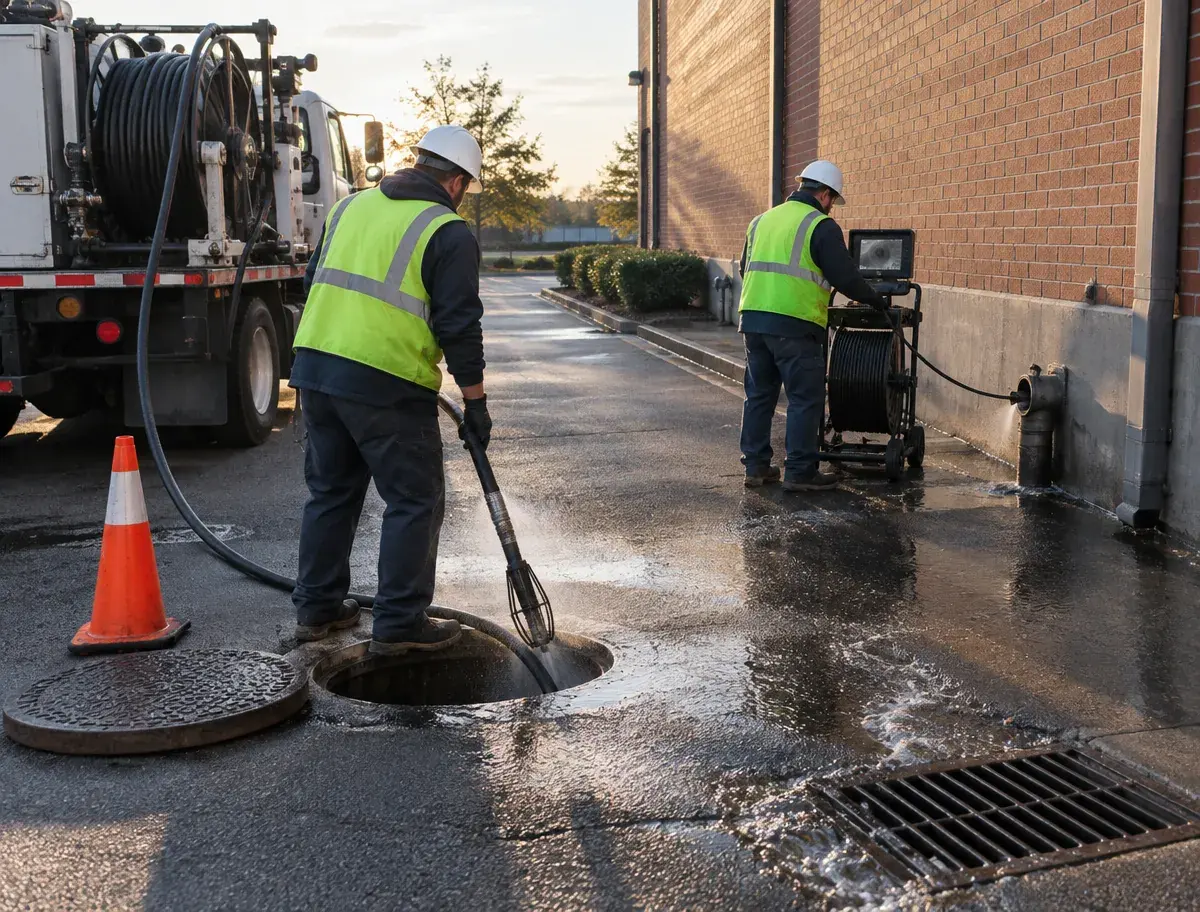
Effective commercial sewer maintenance Nashville follows a disciplined sequence. Skipping steps or reversing the order wastes money and can leave properties exposed to serious failures. We follow a consistent four-phase protocol on the commercial properties we serve across Nashville.
How Do We Start a Commercial Sewer Maintenance Program?
We begin with a camera inspection using PACP condition scoring. This diagnostic step confirms pipe material, diameter, and structural condition before any cleaning or repair work begins. Without it, you risk hydro jetting a pipe that is already compromised. We diagnose before we sell because guessing at blockages usually costs more than getting it right the first time.
The numbered maintenance sequence we follow for Nashville commercial properties:
- Camera inspection with PACP scoring. We run a high-resolution camera through the line and assign standardized condition grades to joints, cracks, and offsets. This creates a baseline record for future comparison.
- Hydro jetting for grease and root clearance. For restaurant and multi-tenant lines, hydro jetting generally clears grease and root intrusion more thoroughly than mechanical rodding. High-pressure water scours the pipe wall rather than just punching a hole through the blockage.
- Post-cleaning verification camera pass. We re-inspect the line to confirm debris is removed and to check for damage the buildup may have been concealing.
- Spot repair or structural lining as indicated. When the PACP report shows cracks, root intrusion, or corrosion, we can install a resin-saturated liner inside the existing sewer pipe. The cured liner forms a hard, jointless pipe-within-a-pipe designed for a long service life, usually without excavation.
What Happens During the Pipe Lining Step?
CIPP pipe lining installs a resin-saturated liner inside your existing sewer pipe and cures it into a structural pipe-within-a-pipe. The process repairs cracks, root intrusion, and corrosion from the inside. Steam or hot water activates the resin, and within hours the liner hardens into a seamless new pipe wall. Nashville property managers often choose CIPP lining in Nashville because it can restore structural integrity without tearing up parking lots, landscaping, or tenant spaces.
How Can Property Managers Avoid Common Sewer Maintenance Mistakes?
Reactive thinking is one of the costliest mistakes in commercial sewer maintenance Nashville property managers make. We see the damage firsthand: emergency dispatch fees, tenant relocation costs, and business interruption claims pile up fast when a sewer line fails without warning. Those reactive expenses often exceed what a planned maintenance contract costs.
Our philosophy is simple: diagnose before we sell. That diagnostic-first approach helps prevent the most common and expensive missteps.
Why Do Commercial Sewer Backups Seem to Happen So Suddenly?
Many sewer line emergencies are not sudden at all. They build up for months, sometimes years, before the first visible backup occurs. Slow-draining floor sinks and intermittent odors are early warnings that often get dismissed. In restaurant and cafeteria lines, grease is a frequent culprit; Metro Water Services’ guidance on preventing sewer clogs and overflows warns that fats, oils, and grease (FOG) clogs can cause sewer overflows. By the time water surfaces in a tenant space, the blockage has usually been forming underground for a while. A scheduled camera inspection can catch these problems long before tenants call.
What Equipment Mistake Do Property Managers Often Make?
Using residential-grade drain cleaners on a commercial system is a common error. Those machines often lack the jetting pressure and camera equipment that larger-diameter commercial sewer lines demand. A residential snake can push past a partial blockage without fully clearing it. We use high-pressure hydro jetting sized for commercial pipe diameters to scour the interior wall.
Preventive steps we recommend:
- Schedule a camera inspection to map your system and document its current condition.
- Perform hydro jetting only after the camera confirms the blockage location and type.
- Compare a maintenance contract against the cost of a single emergency call, using our guide to finding the best sewer repair company Nashville has for proactive property protection.
Frequently Asked Questions
How often should Nashville commercial properties schedule sewer maintenance?
Many Nashville properties with 10 or more units or food-service tenants do well with an annual camera inspection and hydro jetting about every 12 to 18 months. Grease-heavy kitchen lines may need more frequent cleaning, and inspection findings should set the final schedule.
What happens when commercial sewer maintenance gets deferred?
Deferred maintenance often leads to emergency dispatch fees, tenant relocations, and business interruption claims when a line finally backs up. These reactive costs usually exceed what a planned maintenance contract costs.
Why should a camera inspection come before hydro jetting?
A camera inspection shows what is actually in the line, whether grease, roots, scale, or a damaged pipe, and where it is. That lets the technician choose the right cleaning method and avoid jetting a pipe that is already compromised.
Is hydro jetting better than mechanical rodding for restaurant lines?
For grease-heavy restaurant and multi-tenant lines, hydro jetting generally clears grease and root intrusion more thoroughly, because high-pressure water scours the full pipe wall. Rodding can punch through a clog but often leaves residue behind.
What should a seasonal commercial sewer maintenance checklist include?
A typical plan covers grease trap and drain line inspections in winter, hydro jetting and drain cleaning in spring, pump and root checks in summer, and descaling plus a final camera audit in fall. Backflow devices should also stay current on their required testing.
TL;DR — Commercial Sewer Maintenance in Nashville at a Glance
- Annual camera inspections and hydro jetting about every 12 to 18 months help prevent sewer emergencies for most commercial properties.
- Waiting for backups often costs more than a maintenance contract once tenant relocations and business interruption claims are counted.
- A camera inspection before hydro jetting targets the actual blockage and avoids guesswork.
- A quarterly seasonal checklist reduces the risk of holiday-weekend backups and budget-closeout surprises.
- Food-service tenants should keep grease under control and stay current with Metro Water Services requirements.
- Next step: Book a commercial sewer camera inspection with Prodigy Sewer & Drain to set your baseline.
Get a Free Commercial Sewer Maintenance Quote
For Nashville property managers, the path to reliable commercial sewer maintenance is straightforward: commit to an annual inspection rhythm, act on the PACP findings, and address structural issues with trenchless lining before they escalate. The documented baseline from each camera pass turns sewer care from reactive guesswork into predictable asset management.