Cracked Sewer Pipe Repair in Nashville: Your Options, Costs, and What Happens If You Wait
Quick answer: A cracked sewer pipe rarely fixes itself and rarely stays the same size. A small, early crack in Nashville typically costs $1,500–$6,000 to repair with CIPP spot lining. Left alone, that crack widens, lets soil wash into the pipe, and often progresses to a full break or collapse within 1-3 years — at which point the fix jumps to full-length lining or pipe bursting, often $8,000–$20,000 or more. The single biggest cost driver isn’t the repair method. It’s how long the crack sits before you address it.
Not every crack means the same thing, and not every crack needs the same fix. This guide walks through what your options actually are, what they cost at each stage, and — more importantly — what a cracked pipe turns into if it sits unaddressed.
What Happens If You Wait: A Realistic Timeline
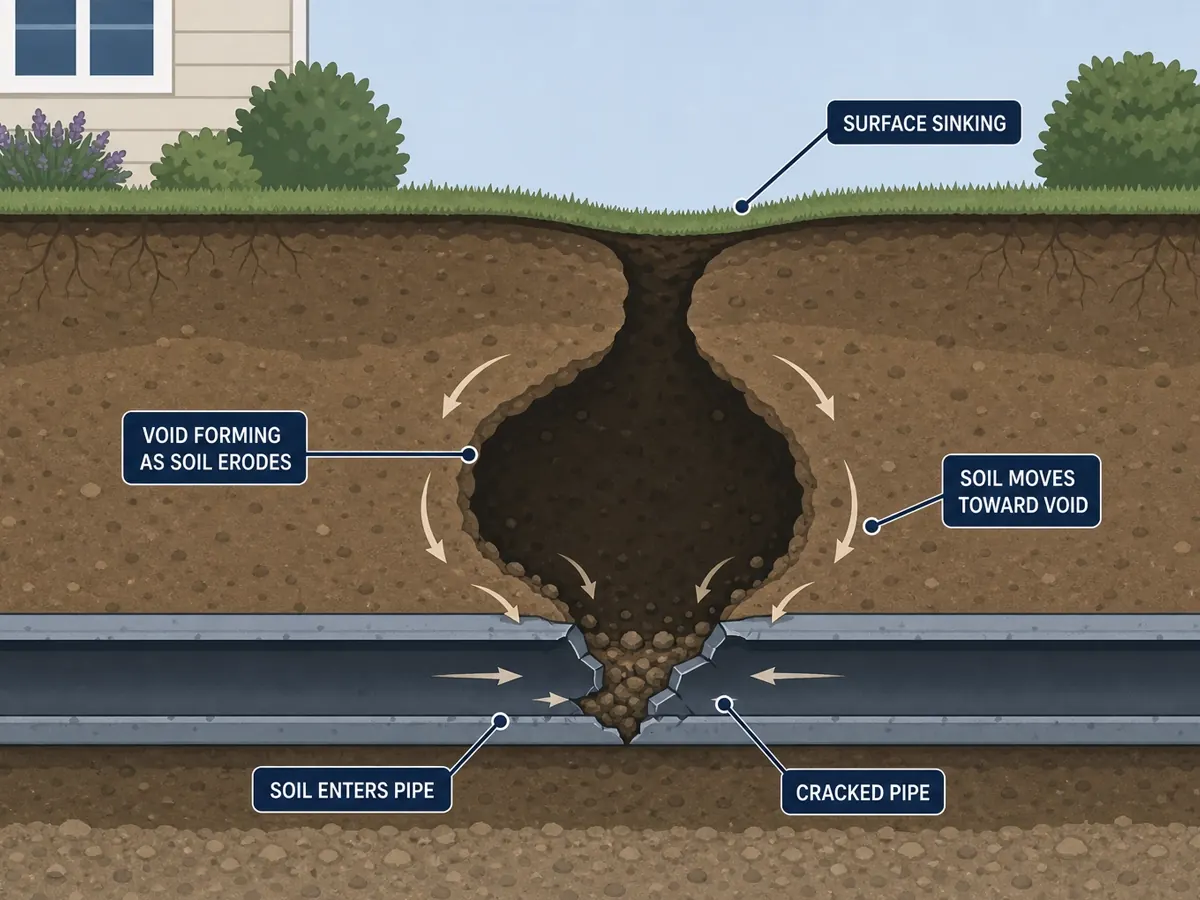
This is the part most cost guides skip. A crack is not a static problem — it’s a process, and peer-reviewed research on sewer pipe failure mechanisms describes how minor defects can undergo quantitative growth over time until reaching a failure threshold, at which point a small, manageable defect becomes a structural failure. Here’s roughly what that looks like on the ground:
| Timeframe | What’s Happening | What It Costs You |
|---|---|---|
| Now | A single small crack, possibly weeping or letting in tree roots | Cheapest window — often a spot repair or short CIPP liner section |
| 3-12 months | Crack widens under normal ground shifting and root pressure; soil begins washing into the pipe | A void starts forming outside the pipe — repair scope grows even if symptoms haven’t changed |
| 1-3 years | Void reaches the surface or the crack progresses to a full break or partial collapse | Full-length lining or pipe bursting typically required instead of a spot fix |
| 3+ years | Sinkhole risk, sewage backup into the home, or a sudden full collapse | Emergency excavation, property damage repair, and the original fix — all at once |
Your Repair Options, from Least to Most Invasive
1. Spot Repair (Sectional Lining)
If a camera inspection confirms the crack is isolated to a short section, a spot repair applies CIPP resin to just that segment — often 2-6 feet — without touching the rest of the line. This is the cheapest and fastest option when it applies, but it only works while the surrounding pipe is still structurally sound.
2. Full-Length CIPP Lining
When cracking has spread along more of the line, or multiple cracks have developed, a full-length liner creates a new pipe inside the old one from end to end. Our trenchless sewer repair cost guide breaks down full-length lining costs and how they compare to other trenchless methods in detail.
3. Pipe Bursting or Full Replacement
Once a crack has progressed to a partial collapse or the pipe has lost its round shape, lining no longer has a stable surface to bond to. At that stage, pipe bursting or full replacement is usually the only durable option. Our sewer line replacement cost breakdown covers what a full replacement costs by line length if your inspection points this direction.
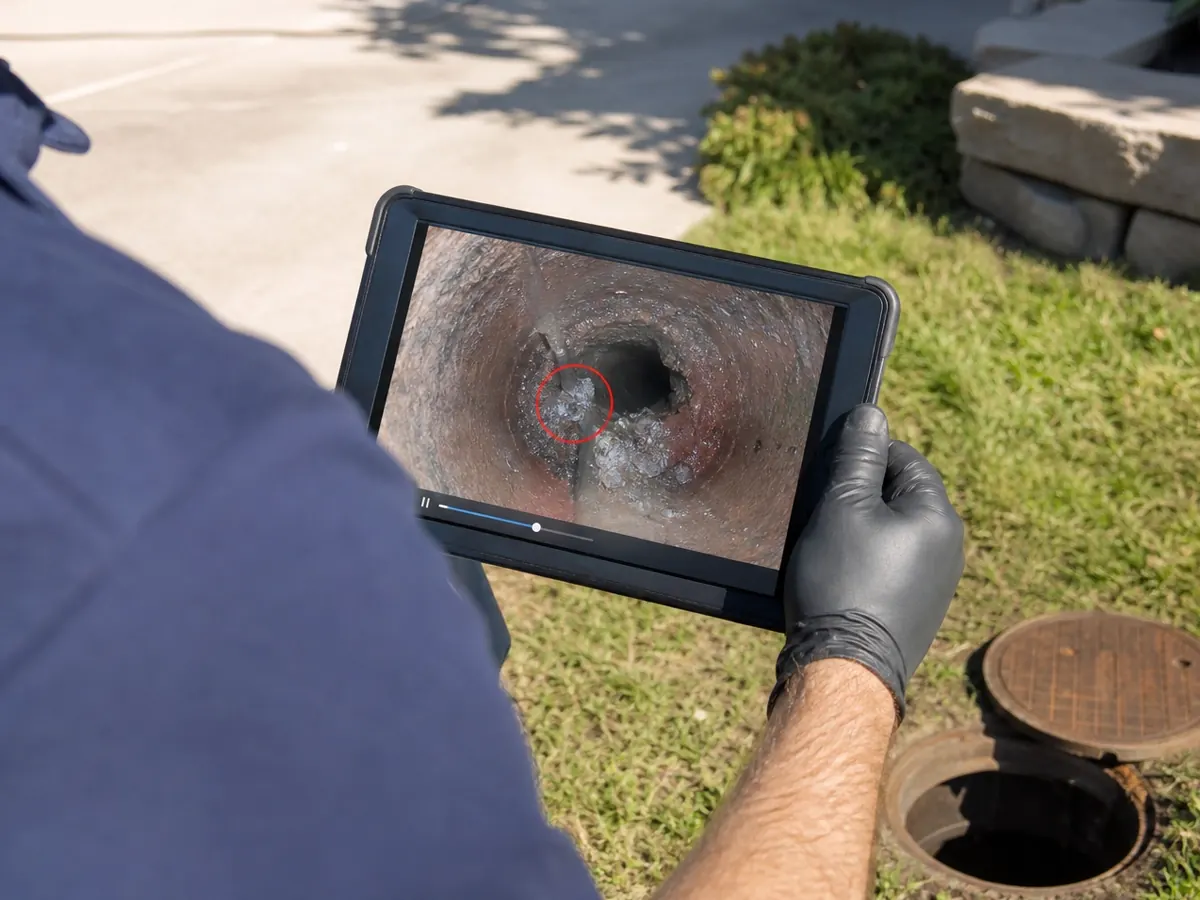
Noticed a wet spot, a slow drain, or a sinkhole starting to form? A camera inspection tells you exactly which stage your crack is at before you spend on the wrong fix. Call or text Prodigy Sewer & Drain at (629) 276-6322.
Why Nashville Homes See This Pattern So Often
Nashville’s older neighborhoods carry a mix of cast iron, clay tile, and Orangeburg laterals that are decades past their original design life, and the region’s clay-heavy soil shifts more than sandier soils elsewhere, putting steady pressure on pipe joints and existing cracks. When soil washes into a cracked pipe, it can eventually create a void beneath the surface — the kind of hidden erosion the EPA identifies as a contributing factor in sanitary sewer overflows when structural defects go unaddressed. That’s the mechanism behind sinkholes that seem to appear overnight — the damage was actually building underground for months.
If a camera inspection shows Orangeburg pipe specifically, that material’s cracking pattern behaves differently — see our Orangeburg pipe replacement page for what that means for your options.
Cracked Sewer Pipe Repair at a Glance
- A small, isolated crack is the cheapest stage to repair — often a $1,500–$6,000 spot lining job.
- Left unaddressed, a crack typically widens and lets soil wash into the pipe within months, not years.
- Within 1-3 years, an untreated crack commonly progresses to a full break, requiring full-length lining or replacement instead of a spot fix.
- A camera inspection is the only way to know which stage your crack is actually at.
- Next step: contact Prodigy Sewer & Drain for a camera inspection before the crack progresses further.
Frequently Asked Questions
How much does it cost to repair a cracked sewer pipe in Nashville?
An isolated, early-stage crack typically costs $1,500–$6,000 to repair with spot lining. If the crack has progressed to affect a longer section of pipe, full-length CIPP lining or pipe bursting can run $8,000–$20,000 or more, depending on length and severity.
Can a cracked sewer pipe fix itself over time?
No. Cracks in buried pipe don’t heal — ground movement, root pressure, and water flow steadily work the crack wider over time. What starts as a hairline crack commonly progresses toward a full break if left unaddressed.
How do I know if my sewer pipe crack is getting worse?
Watch for a wet or unusually green patch of yard over the line, a sewer odor outdoors, a drain that’s gotten slower over recent months, or a sinkhole starting to form near your cleanout. Any of these can indicate a crack has progressed enough to let soil wash into the pipe.
Is it worth repairing a single crack, or should I replace the whole line?
If a camera inspection confirms the crack is isolated and the rest of the pipe is structurally sound, a spot repair is usually the more cost-effective choice. Full replacement only becomes the better option once damage has spread along multiple sections or the pipe material itself (like Orangeburg) is near the end of its usable life.
What happens if a cracked sewer pipe is never repaired?
Over time, the crack typically widens, soil washes into the pipe, and a void can form underground that eventually surfaces as a sinkhole. In the worst cases, the pipe fully collapses, which can cause a sewage backup into the home and requires emergency excavation rather than a planned repair.
Catch the Crack at Its Cheapest Stage
A cracked sewer pipe is one of the few home repairs that reliably gets more expensive the longer it waits. Prodigy Sewer & Drain offers camera-verified inspections to catch cracks at their cheapest, earliest stage. Call or text (629) 276-6322 today.