
5 Signs of an Underground Water Leak in Your Nashville or Franklin Home
An underground water leak rarely announces itself with a puddle — it shows up as a water bill that doesn’t make sense, a faint sound in a quiet room, a warm patch of floor, a new crack in the wall, or a musty smell with no obvious source. Any one of these five signs on its own is worth a second look; more than one together is a strong signal something needs a professional inspection. Here’s what each sign actually looks like and why it happens.
What's in This Post
- The 5 Signs, At a Glance
- Sign 1: An Unexplained Water Bill Spike
- Sign 2: The Sound of Running Water When Everything’s Off
- Sign 3: A Warm Spot on the Floor
- Sign 4: Foundation Cracks or Shifting
- Sign 5: A Musty Smell With No Visible Water
- What to Do If You’re Seeing One or More of These Signs
- Frequently Asked Questions
The 5 Signs, At a Glance
| Sign | What It Looks Like | Why It Happens |
|---|---|---|
| 1. Unexplained water bill spike | Usage rises noticeably with no change in household habits | Continuous underground flow runs 24/7, even when no one’s using water |
| 2. Sound of running water when everything’s off | A faint hiss or trickle audible in a quiet room or near a wall | Water moving through a pressurized line under the slab or yard |
| 3. Warm spot on the floor | One area of flooring feels noticeably warmer than the rest | A leaking hot water line beneath a slab foundation |
| 4. Foundation cracks or shifting | New cracks in the slab, walls, or noticeably sticking doors/windows | Soil moisture changes from a leak destabilize the foundation |
| 5. Musty smell with no visible water | A persistent damp or mildew odor without an obvious source | Moisture accumulating beneath floors or behind walls from a slow leak |
Sign 1: An Unexplained Water Bill Spike
This is the most reliable and most commonly cited sign for a reason. Per EPA WaterSense guidance, checking your water meter before and after a two-hour window with no water use anywhere in the house is the fastest way to confirm whether water is moving somewhere it shouldn’t be. A continuous underground leak runs 24/7 regardless of whether anyone’s home, which is why the usage increase often looks disproportionate to any actual change in household habits.
Sign 2: The Sound of Running Water When Everything’s Off
A pressurized leak makes a distinctive, low sound as water escapes — often described as a faint hiss, trickle, or hollow tone. If you hear this in a quiet room, near an interior wall, or through the floor when every fixture in the house is confirmed off, that’s not your imagination. This sign is exactly what acoustic leak detection equipment is built to isolate and pinpoint, just amplified far beyond what the human ear alone can pick up.
A quick test worth trying: turn off every fixture, then walk the house quietly listening near interior walls and floors, especially in rooms above or near where you suspect a line runs. Background noise from HVAC or appliances can mask a faint leak sound, so try this during a quiet part of the day.
Sign 3: A Warm Spot on the Floor
If one section of flooring feels noticeably warmer than the rest of the room, especially on a slab foundation, that’s a specific and fairly reliable sign of a leaking hot water line running beneath the slab. This sign is easy to miss because it doesn’t look like anything is wrong — there’s no visible water, just a patch of floor that feels different underfoot. Homes with radiant floor heating can complicate this sign, so it’s worth ruling that out first if applicable.
Sign 4: Foundation Cracks or Shifting
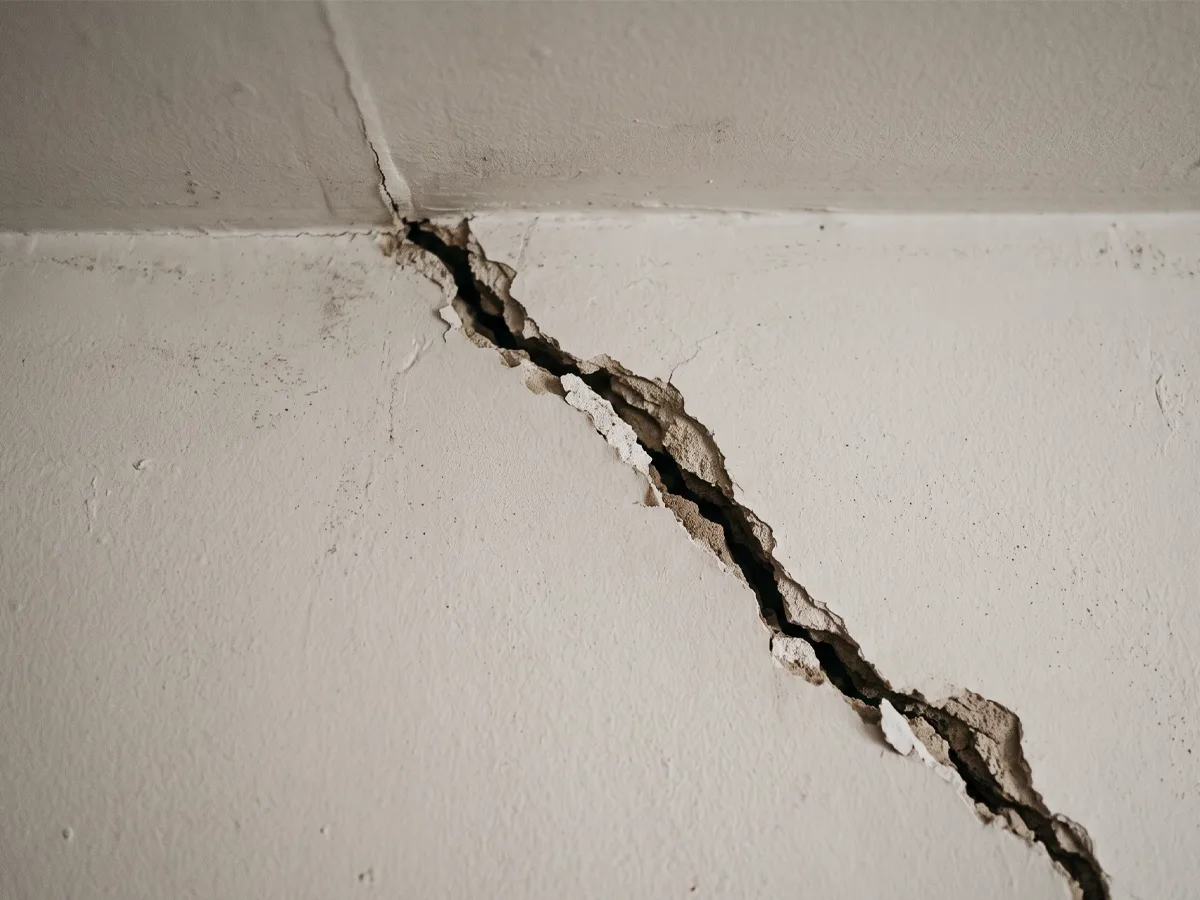
New cracks in a slab, foundation wall, or interior drywall — or doors and windows that suddenly stick or don’t close properly — can be a downstream effect of an underground leak, not just normal settling. Per Olshan Foundation Solutions, clay-heavy soil expands when it absorbs water and contracts as it dries, and a concentrated leak changes the moisture content of the soil around and beneath a foundation unevenly — exactly the kind of localized soil movement that can crack a slab or shift a foundation wall. Middle Tennessee’s moderate clay soil content makes this a genuine, if less obvious, consequence worth ruling out when foundation issues appear without another clear cause.
Sign 5: A Musty Smell With No Visible Water
A persistent damp or mildew smell, with no puddle, wet carpet, or obvious water source in sight, often means moisture has been accumulating somewhere hidden — beneath flooring, inside a wall cavity, or in a crawl space — for long enough to support mold or mildew growth. This is frequently one of the last signs homeowners investigate, because there’s nothing visible to point to, but it’s often present well before any of the more obvious signs show up. In both Franklin and Nashville, older homes with crawl space foundations are especially prone to this sign going unnoticed for a while, since the moisture source is out of sight by default.
What to Do If You’re Seeing One or More of These Signs
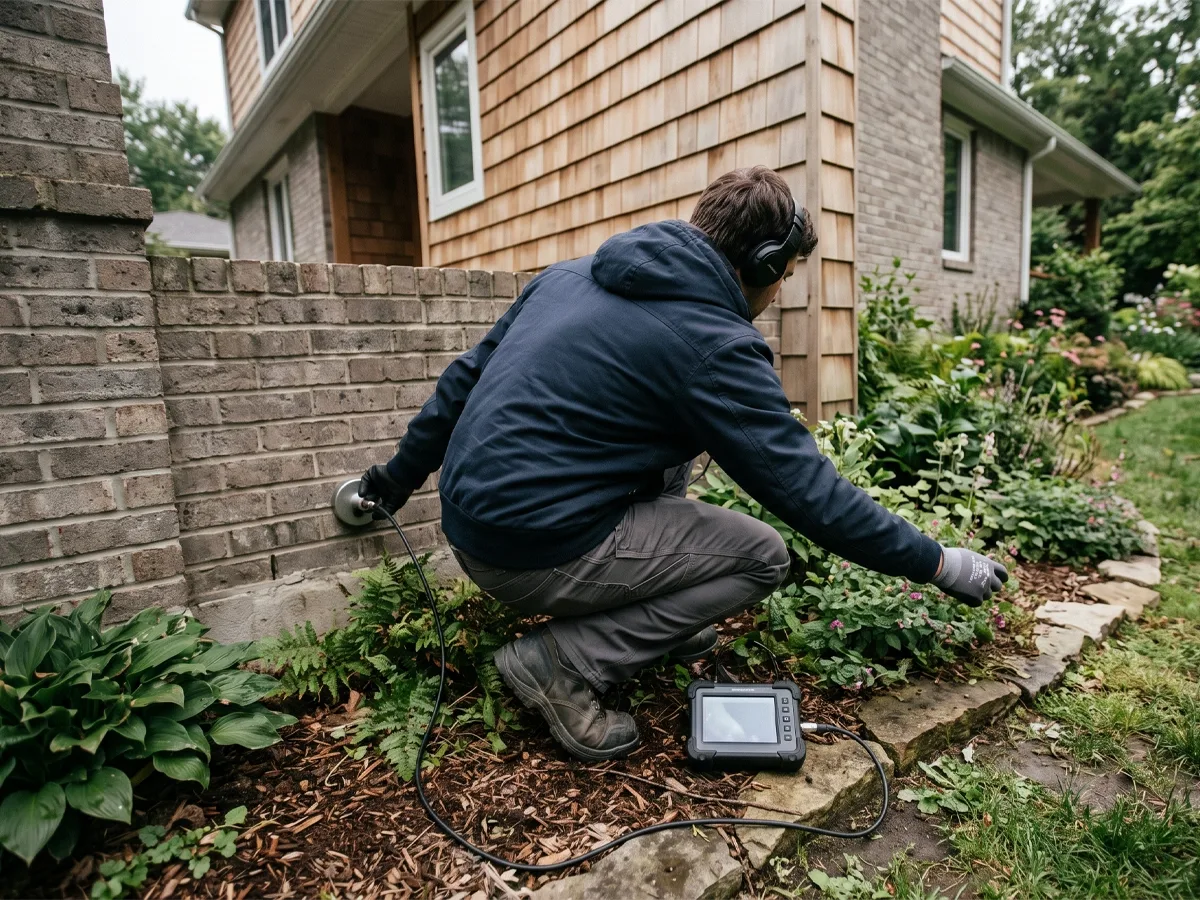
A single ambiguous sign is worth watching; two or more together is worth a professional leak detection visit. Acoustic listening equipment and camera inspection can confirm whether a leak actually exists and pinpoint its exact location — non-invasively, without digging based on a guess.
Frequently Asked Questions
How do I know if a warm floor spot is a leak versus radiant heating?
If your home has a known radiant floor heating system in that area, rule that out first. If there’s no radiant heating installed, or the warm spot is in an area that shouldn’t have any heating element, a hot water line leak is the more likely explanation.
Can foundation cracks from a leak be repaired without fixing the leak first?
Not effectively long-term. Repairing foundation cracks without addressing an active underground leak means the soil movement causing the cracks will likely continue, leading to recurring damage.
Is it normal to hear some water sounds in an older home?
Some ambient sound from supply lines during actual use is normal. A sound that persists when every fixture is confirmed off, especially a consistent hiss or hollow tone, is not normal and warrants investigation.
Which of these five signs is most urgent to act on?
A sudden foundation crack or shift is generally the most urgent, since it indicates the leak has already been active long enough to affect structural soil conditions. The other signs are worth acting on promptly, but a foundation change suggests the leak isn’t a new development.
None of these five signs requires digging up your yard to investigate. A professional inspection can confirm which, if any, applies to your home and exactly where the problem is — before a hidden leak becomes a much larger repair.
Choose Prodigy to Confirm What’s Actually Happening: Prodigy serves Nashville, Franklin, and Williamson County with acoustic leak detection and camera inspection — NASSCO/PACP-certified, 15+ years of trenchless expertise, and a free camera inspection with any booked job. Contact us today to confirm whether what you’re seeing is actually a leak.
Noticing One or More of These Signs?
Prodigy offers free camera inspection with any booked job across Nashville, Franklin, and Williamson County — find out for certain, without digging.