Sump Pump vs. Grinder Pump: What’s the Difference and Which Does Your Nashville Home Need?
Quick Answer: A sump pump vs grinder pump Nashville comparison comes down to what each machine moves: a sump pump removes clear groundwater from a basement or crawlspace to stop flooding, while a grinder pump shreds solid waste from a below-grade toilet or drain and pushes it uphill into the sewer main. Most Nashville homes with a finished basement bathroom or a below-grade addition need a grinder pump, while homes only managing seasonal groundwater need a sump pump. Prodigy Sewer & Drain evaluates each property’s elevation, distance to the sewer line, and connection type before recommending either system.
Sump pumps move clear groundwater from crawlspaces or basements to prevent flooding. Grinder pumps liquefy solid waste from below-grade toilets or drains and push it uphill into the sewer main. Nashville homes with basement bathrooms typically need grinder pump installation, while properties needing groundwater control need sump pump repair or replacement. We evaluate Nashville properties directly, on site, to recommend the correct system before any equipment gets ordered.
We see one mistake constantly in Nashville homes: owners assume a grinder pump is just a heavier-duty sewage pump. It’s not. A sewage pump moves wastewater and solids using an open impeller. A grinder pump shreds solids first, then pumps the slurry through smaller pipe under pressure. Sump pumps, by contrast, handle only groundwater seeping into a basement or crawlspace pit — never wastewater from toilets or drains.
Proper water and wastewater management protects the structural integrity and sanitation of a Nashville property. Choosing the wrong pump type risks backups, foundation moisture, and sanitation hazards that spread far beyond the original problem.
What's in This Post
What’s the Real Difference Between These Pumps?
Function separates these two systems more than horsepower does. A sump pump vs grinder pump Nashville comparison starts with what each machine actually moves: groundwater or raw sewage. Getting that distinction wrong can mean expensive repairs down the road for Nashville homeowners managing basements, crawlspaces, or low-lying additions.
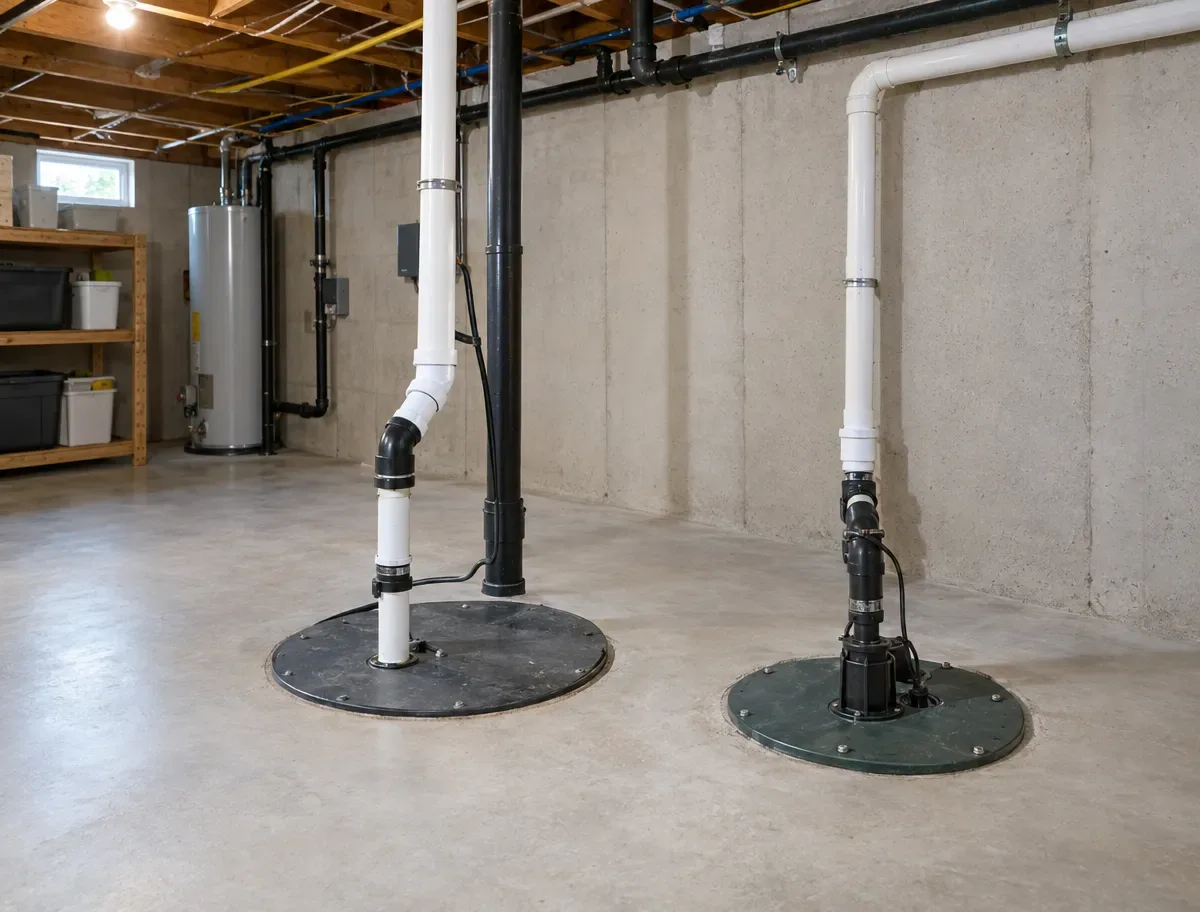
Are sump pumps and sewage pumps interchangeable?
No. Their functions, designs, and applications differ significantly, even though homeowners often use the terms loosely. A sump pump protects against flooding from rainwater and rising groundwater. A sewage pump moves human waste and requires different construction entirely.
Why does the sewage-versus-grinder distinction matter for my project?
The terms get used interchangeably in casual conversation, but the systems solve different problems:
- Sump pumps — remove groundwater, prevent basement flooding
- Sewage pumps — move wastewater and solids short distances by gravity feed
- Grinder pumps — shred and pump waste long distances or uphill, often under pressure
We help Nashville property owners match the correct pump to their specific below-grade plumbing layout before installation begins.
Why Do Nashville Basements Need Pump Systems?
Nashville basements need pump systems because finished lower levels and below-grade bathrooms sit beneath the home’s main sewer line. Gravity moves wastewater downhill, and a fixture installed below that line has nowhere to drain without mechanical help. We see this constantly across Middle Tennessee renovations, including projects in Nashville, TN: a homeowner finishes a basement or adds a downstairs bathroom, then discovers the new toilet or drain sits lower than the sewer main or septic tank. That layout requires a pump to lift wastewater up and out of the house.
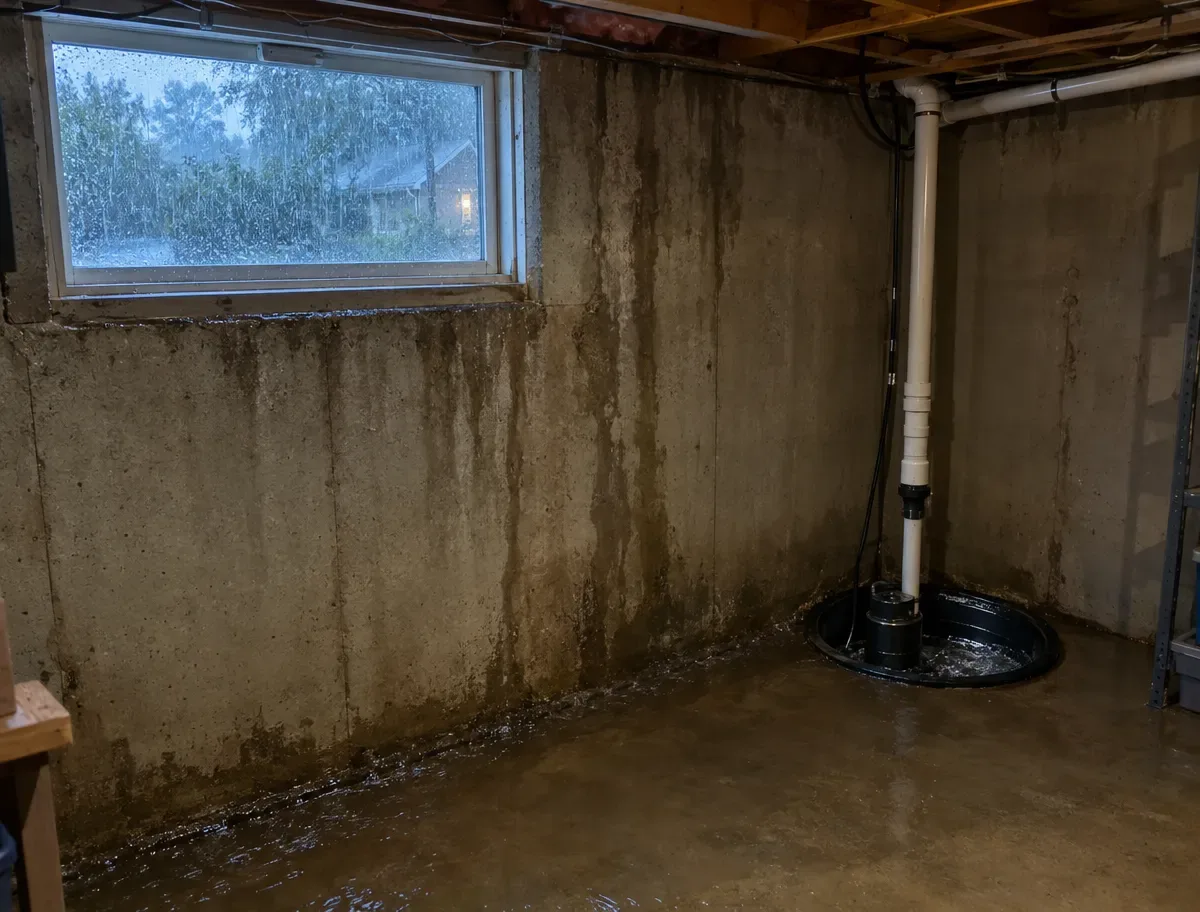
Deciding on the right system often creates confusion. Many Nashville homeowners aren’t sure whether a sump pump vs grinder pump Nashville comparison even applies to their project, or whether a standard sewage pump fits better. The confusion makes sense — these systems solve related but distinct problems.
What’s the Difference Between a Sump Pump and a Sewage Pump?
A sump pump removes groundwater that seeps into a basement, protecting the foundation from flooding. A sewage pump, by contrast, moves actual wastewater from toilets, sinks, and showers uphill to the sewer line. Confusing the two during a Nashville basement remodel leads to equipment that can’t handle solid waste properly.
Does Every Below-Grade Bathroom Need a Pump?
Yes. Any bathroom or drain installed below the home’s sewer line needs a pump, because gravity alone cannot move wastewater out of the structure. This applies whether the fixture connects to municipal sewer or an on-site septic system.
Common situations that trigger the need include:
- Finished or partially finished basements with new bathrooms
- Below-grade laundry rooms or wet bars
- Crawlspace additions on low-lying Nashville lots
- Renovated lower levels tied to older septic layouts
When Does a Nashville Home Need a Grinder Pump?
Grinder pumps become necessary when wastewater must travel long distances, climb significant vertical lift, or push into a pressurized sewer main. Nashville’s rolling terrain creates exactly these conditions for many basement bathrooms, finished lower levels, and homes set well below the street’s sewer line. Short runs into a gravity-fed sewer or septic system rarely need this much muscle — a standard sewage ejector pump handles those jobs instead.
We weigh three factors before recommending either option for a Nashville property:
- Distance the wastewater must travel to reach the main line
- Vertical lift required to overcome elevation change
- Connection type — gravity-fed system versus pressurized sewer main
Is My Nashville Home on Septic or Municipal Sewer?
Plenty of Middle Tennessee properties outside Nashville’s urban core still rely on septic systems rather than city sewer lines. These on-site systems, including tanks, drainfields, and distribution boxes, fall under regulation by TDEC, the Tennessee Department of Environment and Conservation, and the EPA’s guidance on alternative wastewater collection systems covers how grinder pump networks fit into that regulatory picture. Knowing which system serves a property changes the pump conversation entirely — septic setups often pair with different pressure and lift requirements than municipal connections.
Who Handles Grinder Pump Service for Nashville Properties?
We provide grinder and ejector pump service as part of our broader septic work for homes throughout the Nashville area. That work includes septic inspection, septic repair, leach-field testing, and line hydro jetting alongside pump service itself. Comparing a sump pump vs grinder pump Nashville homeowners need starts with an honest look at elevation, distance, and system type — not guesswork. We travel to Nashville properties to make that assessment directly, rather than relying on assumptions from a phone call.
Ready to Get Started? Not sure whether your Nashville property needs a sump pump or a grinder pump? Prodigy Sewer & Drain will evaluate your elevation, distance, and connection type on site and recommend the right system — no guesswork.
What Happens When You Choose the Wrong Pump?
Wrong pump selection creates inefficiencies, triggers system failures, and drives up repair costs for Nashville homeowners down the road. A pump that cannot handle the demands of a below-grade bathroom or a flood-prone crawlspace will struggle from day one. We see this pattern often across Middle Tennessee basements: the system looks fine on paper, then fails within months.
Ordering a replacement pump can feel as simple as matching an old model number and clicking “buy.” That assumption causes more Nashville service calls than almost anything else we encounter. Installing the wrong unit the first time doesn’t just create an inconvenience — it plants a problem that resurfaces, often at the worst possible moment.
Why Does the Wrong Pump Fail So Quickly?
Sewage flow contains solids that standard pumps aren’t built to move. A pump undersized for the job clogs, overheats, or burns out its motor well before its expected lifespan. Our technicians open up failed systems across Nashville and find pumps that were simply mismatched to the household’s wastewater volume or lift distance from the start.
The stakes go beyond the pump itself. Consider what’s typically at risk:
- Backups into finished basements or below-grade bathrooms
- Premature motor failure from handling waste the pump wasn’t designed to process
- Repeat service calls that add up faster than one correct installation would have cost
- Water damage to flooring, drywall, and stored belongings
Getting the selection right the first time protects the investment and keeps Nashville homeowners satisfied with the work for years to come. This is the core operational philosophy we build every installation around: solve the actual problem once, not repeatedly.
How Can Prodigy Help Nashville Homeowners Decide?
Nashville homeowners get a straight answer from our team, not a guessing game between pump types. Prodigy Sewer & Drain works from Franklin, TN, and travels throughout the Nashville area to evaluate below-grade bathrooms, finished basements, and low-lying lots where gravity alone can’t move wastewater. Deciding between a sump pump vs grinder pump Nashville homeowners need starts with an honest look at the plumbing system, not a sales pitch.
Our core operational philosophy centers on permanent fixes over quick patches, especially when a below-grade fixture depends on the right pump for years of reliable service. We’d rather spend extra time diagnosing the setup than leave a homeowner with equipment mismatched to the job.
What Do We Actually Check Before Recommending a Pump?
We trace where the wastewater needs to go, how far it travels, and whether it’s headed into a gravity sewer or a pressurized main. That assessment determines whether a standard ejector pump handles the load or whether a grinder unit is required for longer runs.
Beyond the pump decision itself, our focus stays on the whole drain line. We’re known for getting backed-up drains flowing fast, but speed only matters if we also find out why the backup happened in the first place.
That diagnostic mindset carries into every service we offer across Middle Tennessee, including:
- Traditional dig repair for straightforward access points
- Five trenchless, no-dig technologies suited to different pipe conditions
- Custom solutions matched to the specific system, not a one-size-fits-all fix
That range lets Nashville homeowners solve the immediate pump question and the underlying sewer health question in one visit.
Frequently Asked Questions
What is the main difference between a sump pump and a grinder pump?
A sump pump moves clear groundwater from crawlspaces or basements to prevent flooding. A grinder pump liquefies solid waste from below-grade toilets or drains and pushes it uphill into the sewer main.
Do Nashville homes with basement bathrooms need a grinder pump?
Yes. Below-grade bathrooms sit beneath the home’s main sewer line, and gravity cannot move wastewater upward. A grinder pump lifts and pushes the waste out of the house.
Are sump pumps and sewage pumps the same thing?
No. Sump pumps protect against flooding from rainwater and rising groundwater. Sewage pumps move human waste and solids using different construction built for that purpose.
How much does grinder pump installation cost in Nashville?
Cost varies with pipe distance, elevation change, and existing plumbing layout. Because every below-grade bathroom or addition sits differently relative to the sewer main, Prodigy Sewer & Drain provides a site evaluation before quoting a grinder pump installation.
How long do sump and grinder pumps typically last?
Most properly sized pumps last roughly 7 to 10 years with normal use, though a grinder pump that’s undersized for its wastewater load can fail in a fraction of that time, which is why correct sizing matters as much as the equipment itself.
TL;DR — Sump Pump vs. Grinder Pump at a Glance
- Sump pumps move only clear groundwater; they are never rated for toilet or drain waste.
- Grinder pumps shred solid waste and push it under pressure, often uphill, to the sewer main.
- Below-grade bathrooms and additions almost always need a grinder or ejector pump, not a sump pump.
- The right choice depends on distance, vertical lift, and whether the connection is gravity-fed or pressurized.
- An undersized or mismatched pump fails early and causes backups, motor burnout, and water damage.
- Next step: have Prodigy Sewer & Drain evaluate your Nashville property before you buy a replacement pump.
Get a Free Sump or Grinder Pump Quote
Understanding the distinction between sump pumps and grinder pumps empowers you to make the right choice for your Nashville home’s drainage needs. Our certified technicians evaluate your specific elevation, distance, and connection type on site, then recommend the system that delivers lasting peace of mind. Contact Prodigy Sewer & Drain today for a free, no-obligation quote.