Tree Roots in Your Sewer Line: 5 Warning Signs Nashville & Franklin Homeowners Shouldn't Ignore
Tree roots are one of the most common — and most misunderstood — causes of sewer line trouble in Middle Tennessee. Nashville's tree-lined historic neighborhoods and Franklin's mature-canopy estate lots both create ideal conditions for root intrusion, and the signs often show up gradually enough that homeowners write them off as minor plumbing quirks until the line actually backs up. Here are the five signs worth taking seriously.
The 5 Warning Signs at a Glance
| Sign | What You Notice | Why It Happens |
|---|---|---|
| 1. Slow drains throughout the house | Multiple fixtures — not just one — drain sluggishly, especially the lowest ones in the house. | Roots narrow the pipe's interior, restricting flow well before the line fully blocks. |
| 2. Gurgling sounds from drains or toilets | A gurgling or bubbling noise when you run water elsewhere in the house. | Air trapped behind a partial root blockage escapes back up the line as water tries to pass. |
| 3. Unusually green or soggy patches in the yard | A strip of grass over the sewer line that's noticeably greener, lusher, or wetter than the rest of the yard. | Roots have breached the line and it's leaking nutrient-rich wastewater into the surrounding soil. |
| 4. Recurring backups after cleaning | The same drain backs up again within weeks or months of being cleared. | Cutting the roots out of the line doesn't remove the crack or joint gap that let them in — they grow back. |
| 5. Sewer odor indoors or in the yard | A persistent sewer smell near a drain, cleanout, or a specific spot in the yard. | Wastewater escaping through root-damaged joints reaches the surface before it can dissipate underground. |
Why Nashville and Franklin Are Especially Prone to This
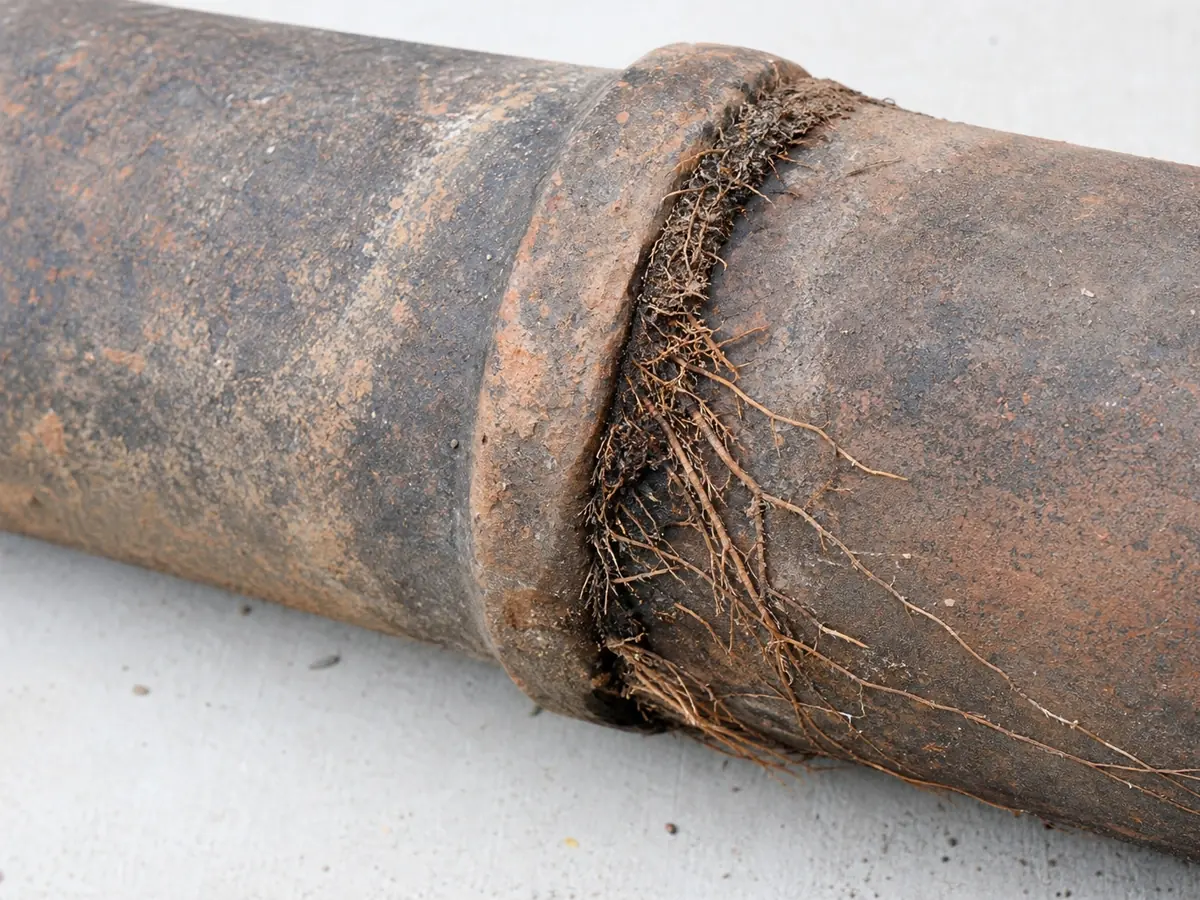
Roots don't seek out pipes randomly — they grow toward moisture, and a leaking or loosely jointed sewer line is exactly the kind of moisture source that draws them in. A peer-reviewed study published by the International Society of Arboriculture found that tree roots rarely crack healthy pipe outright — instead, they're "attracted to the moist and fertile environment which exists at leaks" and enter through cracks, loose joints, or failed seals that are already there. That means the root intrusion itself is often a symptom of an aging pipe, not a standalone problem.
In Nashville, more than half of homes were built before 1983, and cast iron and Orangeburg laterals installed decades ago are well past the point where their joints seal tightly. Franklin's historic downtown (37064) carries similar original cast iron and clay tile, and the mature tree canopy over those neighborhoods creates constant root pressure at every joint. The EPA notes that tree roots entering through defects or openings in a sewer line are a recognized cause of sanitary sewer overflows nationally — Nashville's older housing stock just makes the underlying pipe conditions more common here than average.
Why Cutting Roots Out Isn't a Permanent Fix
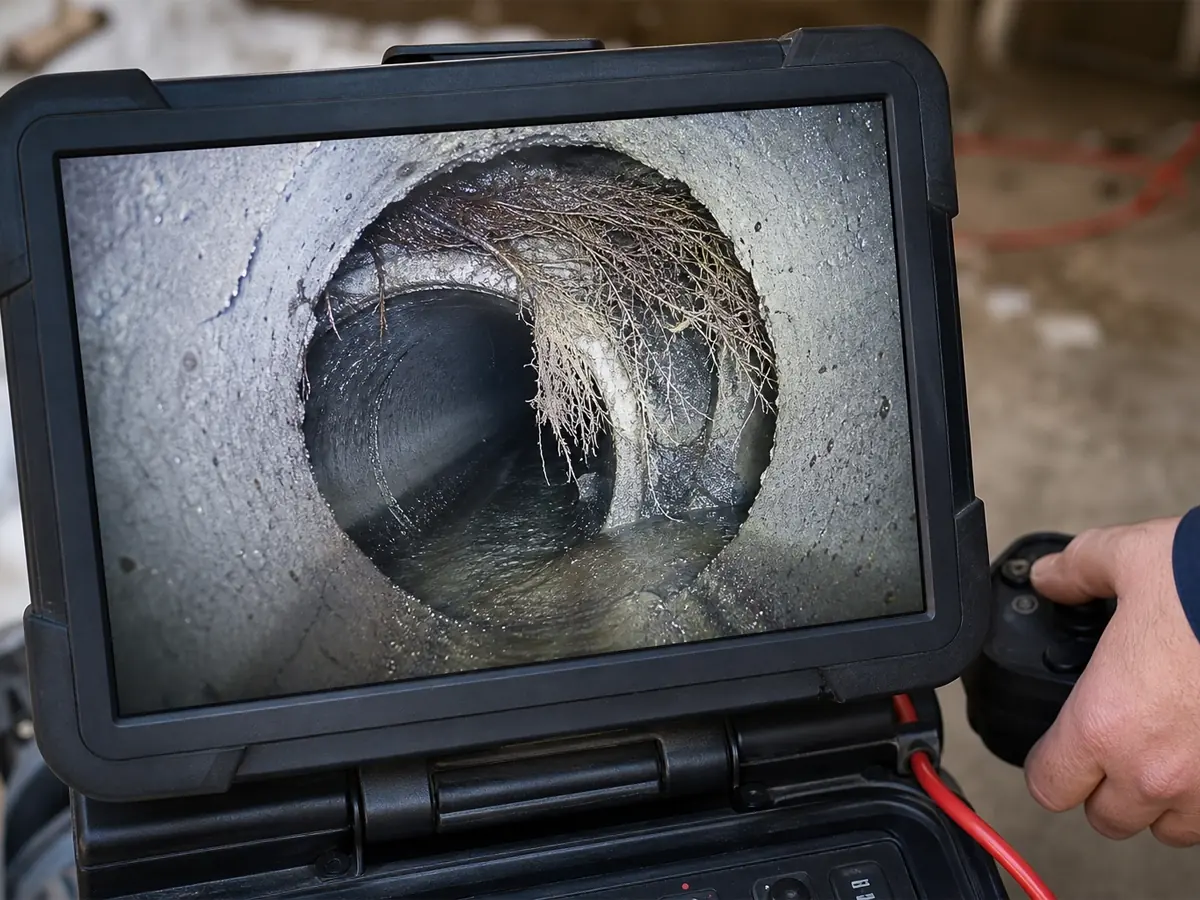
A common mistake is treating root intrusion as a one-time clog. Mechanically cutting roots out of a line (or using a chemical root killer) clears the immediate blockage, but it doesn't repair the crack or joint gap the roots grew through in the first place — so they grow back, often within a year. A sewer camera inspection is the only way to confirm whether you're dealing with a single small crack that a spot repair can fix, or a pipe old enough (like Orangeburg or original cast iron) that full trenchless replacement makes more sense long-term.
If a camera inspection identifies Orangeburg pipe specifically — common in Nashville and Franklin homes built from the 1940s through the 1970s — it can't be lined, since the material deforms and won't hold a liner. Our Orangeburg pipe replacement page covers what that process looks like and why waiting tends to make it more expensive.
Noticing any of these 5 signs? Prodigy Sewer & Drain offers a free camera inspection with any booked repair or service across Nashville and Franklin. Call or text (629) 276-6322.
What to Do If You Recognize These Signs
- Don't wait for a full backup. Catching root intrusion at the slow-drain or gurgling stage is far cheaper than dealing with a sewage backup into your home.
- Get a camera inspection before assuming you need a full replacement. Many root intrusion cases are a single joint or crack that a targeted trenchless repair can fix without excavating the whole line.
- Ask specifically about pipe material and age. Homes in Nashville's pre-1983 neighborhoods and Franklin's historic downtown are the most likely candidates for root-prone cast iron, clay, or Orangeburg laterals.
- If you're in Nashville, our nashville-tn service page covers local pipe age and soil conditions in more depth; Franklin homeowners can find the same for their market on our franklin-tn page.
Tree Roots in Your Sewer Line at a Glance
- Slow drains throughout the house and gurgling sounds are usually the earliest, most overlooked signs.
- Unusually green or soggy yard patches and recurring backups after cleaning mean the intrusion has progressed.
- Roots grow toward moisture and enter through existing cracks and joints — they rarely cause the crack themselves.
- Cutting roots out clears the symptom but not the underlying pipe defect, so a camera inspection is worth getting before assuming the problem is solved.
- Next step: contact Prodigy Sewer & Drain for a free camera inspection.
Frequently Asked Questions
Can tree roots actually break a sewer pipe, or do they just grow into existing damage?
Research on PVC pipe root penetration shows roots rarely crack healthy, properly installed pipe outright. They're drawn to the moisture around an existing crack, loose joint, or failed seal and grow in through that opening — which is why an aging or already-compromised pipe is far more vulnerable than a newer, well-sealed one.
How do I know if my slow drains are from tree roots or something else?
Tree root intrusion typically affects multiple fixtures throughout the house rather than just one, tends to worsen gradually over weeks or months, and often comes with gurgling sounds or a yard patch that's unusually green or wet. A single slow drain in one location is more often a localized clog unrelated to roots.
Will cutting the roots out of my sewer line fix the problem for good?
Not usually. Mechanical or chemical root cutting clears the immediate blockage, but the crack or joint gap the roots entered through is still there, so roots typically return within a year or two. A camera inspection can confirm whether a permanent repair — like trenchless pipe lining — makes more sense than repeat cutting.
Which Nashville and Franklin neighborhoods are most prone to root intrusion?
Areas with mature tree canopy over older pipe are the highest risk — Nashville's pre-1983 neighborhoods like East Nashville and Belle Meade, and Franklin's historic downtown (37064) with original cast iron and clay tile laterals. Newer construction with PVC piping and welded joints is far more resistant to root intrusion.
Does homeowners insurance cover sewer line repair caused by tree roots?
Coverage varies significantly by policy — root intrusion is generally considered a maintenance issue rather than a sudden, covered loss, so many standard policies exclude it unless you've added a service line or sewer backup endorsement. Check your specific policy or ask your agent before assuming you're covered.
Find Out What's Really Happening in Your Line
Tree root intrusion rarely announces itself all at once — it builds gradually until a slow drain becomes a full backup. Prodigy Sewer & Drain offers a free camera inspection with any booked repair or service across Nashville, Franklin, and Middle Tennessee. Contact us today to find out what's really happening in your line.