Trenchless Sewer Repair in Nashville, TN
Nashville is the single highest-demand trenchless market in Middle Tennessee — and its infrastructure story is the reason. We line and burst failing laterals across the city's pre-1983 cast iron and Orangeburg pipe, the least-invasive way the line allows.
Why Nashville Needs Trenchless Sewer Repair
More than 50% of Nashville homes were built before 1983, which means cast iron and Orangeburg laterals are actively failing or past their design life. Over 6,000 miles of underground infrastructure and the 2009 federal Clean Water Consent Decree against Metro have put sustained pressure on lateral-connection compliance and homeowner awareness. Historic districts like Germantown and East Nashville carry Victorian-era clay tile at 130-plus years old. This page speaks to that specific Nashville narrative — not a generic one.
What's Actually Failing in Nashville's Sewer Lines
Most calls trace back to a few recurring failure modes. Here's what we find on camera — and why cleaning alone rarely fixes them.
- Root intrusion. Tree and shrub roots find the smallest crack or loose joint and grow into the line, feeding on the water inside. They snag wipes and grease and cause recurring backups. Cabling cuts them back temporarily, but they grow right back — the lasting fix is CIPP lining (which seals the cracks roots enter through) or pipe bursting to replace the line entirely.
- Cast iron corrosion & scaling. Nashville's pre-1983 cast iron builds up interior scale that narrows the pipe and catches debris until flow chokes off. Descaling plus a CIPP liner restores a smooth, full-diameter pipe.
- Orangeburg deterioration. Tar-paper Orangeburg pipe (1945–1972) softens, blisters, and collapses. It can't be lined — it must be replaced by pipe bursting.
- Offset joints & cracks. Nashville Basin limestone and karst movement shift sections out of alignment, opening gaps that let in roots and groundwater. Trenchless lining bridges the joints from the inside.
Nashville Cost Factors
Nashville trenchless cost is shaped by five local drivers: Metro permit fees and inspections on main-line work; Victorian-era clay tile in Germantown and East Nashville requiring specific CIPP techniques; premium cast-iron replacement in Belle Meade, Hillwood, and Oak Hill for landscape preservation; automatic pipe-bursting when Orangeburg is identified; and urban-core excavation constraints in The Gulch and downtown that make trenchless economically dominant.
Published Nashville Figures
- CIPP pipe lining (incl. prep)$180–$200 / ft
- Pipe bursting$150–$180 / ft
- Spot repair$3,000–$5,000
- Full dig-and-replace (80-ft typ.)$8,000–$10,000
Final pricing depends on depth, transitions, and fittings — we confirm the exact figure after a free camera inspection.
In the urban core, excavation constraints in areas like The Gulch make trenchless the economically dominant choice.
A Local Example
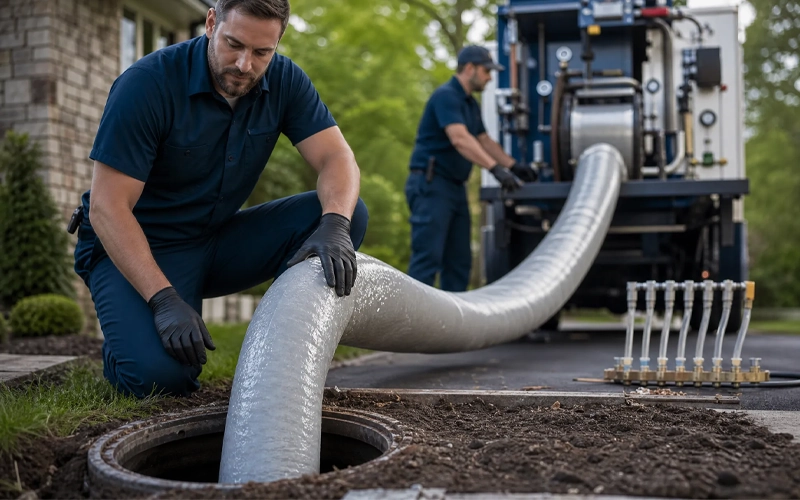
The Gulch commercial trenchless pipeline repair — a high-density urban mixed-use environment where open excavation was not practical. A clear demonstration of urban commercial trenchless capability in Nashville's core.
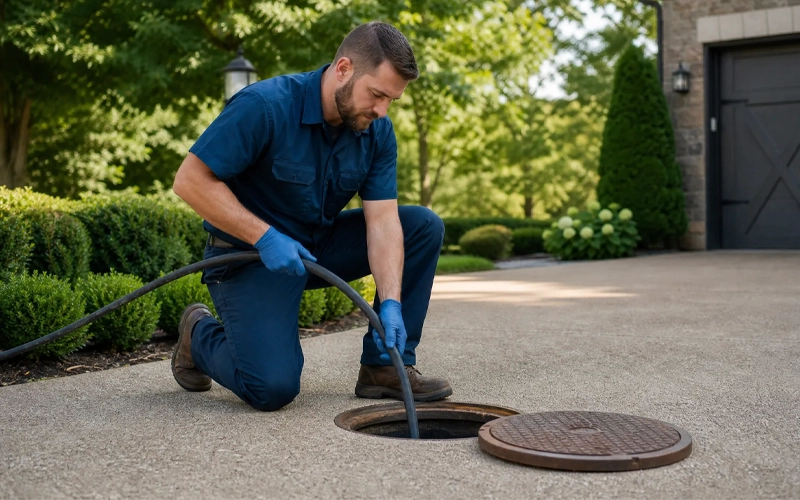
Nashville condo community multi-technology rehab — UV CIPP, steam-cure CIPP, and spray epoxy across three pipe types in four days, zero excavation, saving roughly $26,000 versus a failed $50,000 excavation attempt.
Neighborhoods We Serve
We line and burst sewer laterals across Nashville's historic, urban, and estate neighborhoods.
Permits & Regulations
A Metro Nashville Water Services permit is required for all sewer lateral and main-line work. Commercial CIPP work may require additional Metro Public Health inspection for FOG line systems, and historic overlay districts like Germantown and East Nashville may require Metro Historical Commission review for surface restoration. The 2009 federal Clean Water Consent Decree applies to owners with infiltration/inflow issues, and TDEC oversees commercial discharge permits. We handle Metro permitting for you.
Nashville Trenchless FAQ
How much does trenchless sewer repair cost in Nashville, TN?
Published figures: CIPP pipe lining runs $180–$200 per linear foot (includes prep — hydro jetting and descaling), pipe bursting runs $150–$180 per linear foot, a spot repair runs $3,000–$5,000, and a full dig-and-replace runs $8,000–$10,000 (80-ft typical residential, depending on depth, transitions, and fittings). In Nashville's urban core, excavation constraints in areas like The Gulch make trenchless the economically dominant choice. We confirm your exact price after a free camera inspection.
Do I need a Metro Nashville Water Services permit for trenchless repair?
Yes — Metro Nashville Water Services requires a permit for all sewer lateral and main-line work. Commercial CIPP work may need additional Metro Public Health inspection for FOG line systems, and historic overlay districts like Germantown and East Nashville may require Metro Historical Commission review for surface restoration. We handle Metro permitting for you.
Can you line my pre-1983 Nashville home's sewer pipe?
Usually, yes — if the pipe is cast iron or clay it is typically a strong CIPP lining candidate. The exception is Orangeburg pipe (common in 1945-to-1972 construction), which cannot be lined and instead calls for pipe bursting. We identify the material with a camera inspection before recommending a method.
What's the trenchless repair process in Nashville's historic overlay districts?
In overlay districts like Germantown and East Nashville, we work from existing access points to avoid disturbing protected streetscape, and we coordinate any surface restoration with Metro Historical Commission review. Trenchless is ideal here precisely because it avoids open trenching across historic property.
Do you handle Orangeburg pipe replacement in Nashville?
Yes. Orangeburg pipe — a tar-paper material used in 1945-to-1972 construction — deforms and cannot be lined, so it automatically calls for pipe bursting. Identifying Orangeburg on the camera inspection is a key step, and it is common across Nashville's pre-1983 housing stock.
How long does CIPP lining take for a typical Nashville residential lateral?
A typical residential lateral lining is often completed in a single day once access is prepared, though urban-core access constraints and line length affect the schedule. We give you a realistic timeline after the camera inspection.
Failing Line in Nashville? Find Out If It Can Be Lined.
We score the pipe on camera first, identify cast iron vs. Orangeburg, and recommend the right trenchless method — Metro permitting handled. Call or text (629) 276-6322.