Corroded Sewer Pipe Repair in Tennessee: How to Spot It, Fix It, and Prevent It
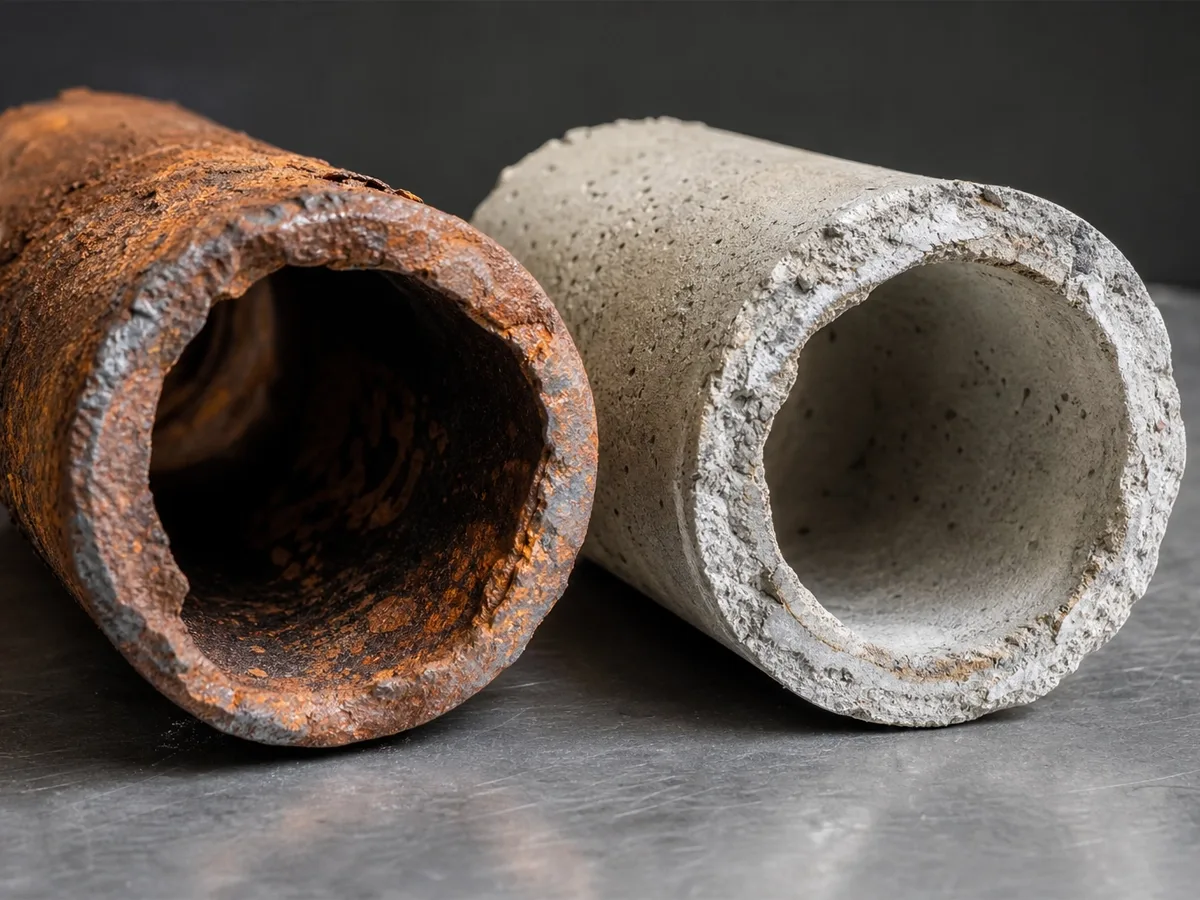
Corrosion doesn’t look the same in every sewer pipe. A cast iron line corrodes differently than galvanized steel, and both corrode completely differently than concrete or clay pipe — which actually breaks down from the inside through a bacterial process, not simple rust. Knowing which one you’re dealing with changes how you spot it, what fixing it actually involves, and what prevents it from coming back.
How Corrosion Actually Differs by Pipe Material
Metal pipe corrosion and non-metal pipe corrosion are genuinely different processes. McWane Ductile’s technical explanation of tuberculation describes how unlined cast iron gradually builds up rough, iron-oxide deposits on the interior wall — the same basic oxidation process that also thins galvanized steel once its protective zinc coating wears through. Concrete and clay pipe fail through an entirely different mechanism, driven by bacteria rather than oxygen:
| Pipe Material | How It Corrodes | Early Sign |
|---|---|---|
| Cast iron | Tuberculation — iron oxide deposits build up on the interior wall, narrowing flow | Rust-colored water, gradually slowing drains |
| Galvanized steel | The zinc coating wears through, exposing bare steel to rust from the inside out | Reduced flow, occasional rust flecks |
| Concrete or clay | Sulfate-reducing bacteria produce hydrogen sulfide gas, which other bacteria convert into sulfuric acid that attacks the pipe crown | Persistent sewer odor, structural softening at the pipe’s upper interior |
Spot It: Recognizing Corrosion Before It Fails
- Rust-colored or metallic-tasting water: The clearest sign of metal pipe corrosion — cast iron or galvanized steel breaking down and releasing iron oxide into the water.
- Drains that have gotten slower over months, not overnight: Corrosion narrows a pipe gradually rather than blocking it suddenly, which is why it’s often mistaken for a simple clog at first.
- Persistent sewer odor without an obvious clog: This can point to the sulfuric-acid corrosion process happening in concrete or clay sewer pipe, which produces its own distinct smell as it progresses.
- Recurring backups after cleaning: If a cleared line backs up again within months, the underlying pipe wall is likely too corroded to hold a clean state for long.
Fix It: What Repair Actually Looks Like
The right fix depends on how far the corrosion has progressed, confirmed by a camera inspection rather than a guess based on symptoms alone. For cast iron specifically, our Cast Iron Pipe Replacement guide covers the tuberculation process in detail and when relining is still possible versus when replacement is the only option. In general, across all corroded materials:
- Early-stage corrosion: If the pipe still holds its shape, CIPP lining can renew it from the inside without excavation.
- Advanced corrosion: Once the pipe wall has thinned significantly or lost its round shape, pipe bursting or full replacement becomes the more durable option.
- Concrete/clay crown corrosion: Because this attacks the pipe’s structural integrity from the inside, even moderate cases often warrant a full camera assessment before deciding between spot repair and full-length lining.
Noticing rust-colored water, a persistent odor, or recurring backups? A camera inspection tells you exactly what kind of corrosion you’re dealing with and what stage it’s at. Call or text Prodigy Sewer & Drain at (629) 276-6322.
Prevent It: Slowing Corrosion Before It Starts
Corrosion can’t be stopped entirely in an aging pipe, but its pace can be slowed. Structural pipe failure from corrosion is also a recognized contributor to sanitary sewer overflows tracked by the EPA, which is part of why catching corrosion early matters beyond the repair bill:
- Schedule periodic camera inspections, especially for homes with pre-1980s cast iron or galvanized plumbing, to track corrosion progress before it becomes a failure.
- Avoid pouring grease, harsh chemical drain cleaners, or non-flushable wipes down drains, all of which accelerate interior pipe wear.
- For galvanized-to-copper plumbing connections, confirm a dielectric fitting is in place — connecting these metals directly accelerates corrosion through galvanic action.
- Address tree root intrusion promptly, since roots entering at a joint create the moisture pathway that speeds up both metal corrosion and concrete crown deterioration.
Corroded Sewer Pipe Repair at a Glance
- Cast iron, galvanized steel, and concrete/clay pipe each corrode through a different mechanism — metal oxidation versus bacterial sulfuric acid production.
- Rust-colored water, gradually slowing drains, persistent odor, and recurring backups are the clearest signs across all materials.
- A camera inspection determines whether lining, pipe bursting, or full replacement fits your pipe’s actual condition.
- Periodic inspection, avoiding grease and harsh chemicals, and addressing root intrusion promptly all slow corrosion’s progress.
- Next step: contact Prodigy Sewer & Drain for a camera inspection to identify your pipe’s condition.
Frequently Asked Questions
How do I know if my sewer pipe is corroded versus just clogged?
A simple clog usually happens suddenly and affects one fixture. Corrosion tends to show up as a gradual slowdown across multiple drains over weeks or months, sometimes paired with rust-colored water or a persistent odor — a pattern rather than a single event.
Can a corroded sewer pipe be repaired without digging up my yard?
Often, yes. If a camera inspection confirms the pipe still holds its structural shape, trenchless CIPP lining can renew it from the inside through existing access points. Once corrosion has significantly thinned the pipe wall or caused it to lose shape, trenchless pipe bursting is usually still possible without a full excavation.
Why do concrete and clay sewer pipes corrode if they’re not metal?
Bacteria in wastewater produce hydrogen sulfide gas, which other bacteria living on the pipe’s upper interior surface convert into sulfuric acid. That acid attacks the cement or clay material directly, which is a completely different process from metal rusting but can be just as damaging structurally.
Does homeowners insurance cover corroded sewer pipe repair?
Coverage varies significantly by policy. Corrosion is often considered a gradual maintenance issue rather than a sudden covered loss, so many standard policies exclude it unless a specific sewer line or service line endorsement has been added. Check your specific policy or ask your agent.
How often should an older Middle Tennessee home have its sewer line inspected for corrosion?
Homes with original cast iron or galvanized plumbing, particularly those built before 1980, generally benefit from a camera inspection every few years, or sooner if any of the warning signs above appear.
Catch Corrosion While Repair Is Still the Cheaper Option
Corrosion rarely announces itself all at once — it builds gradually, whether it’s metal oxidation or the slower bacterial process that attacks concrete and clay pipe. Prodigy Sewer & Drain offers camera-verified inspections to catch corrosion early, while repair is still the cheaper option. Call or text (629) 276-6322 today.