How Do You Keep a Sewer Line Healthy? A Homeowner’s Guide to Sewer Maintenance in Nashville
Quick Answer: A homeowner’s guide to sewer maintenance comes down to four habits: know what part of the line you own, watch for warning signs like gurgling and multiple slow drains, keep grease and wipes out of the system, and schedule professional camera inspections and cleaning. Older Nashville homes with cast iron lines often benefit from cleaning every 18 to 24 months, newer homes every 2 to 3 years. When damage appears, a camera inspection shows whether trenchless lining can fix it without digging up the yard.
Most Nashville homeowners don’t think about their sewer line until a backup reaches the basement or a tub. By then, the fix is urgent and often more expensive than it needed to be. This homeowner’s guide to sewer maintenance from Prodigy Sewer & Drain covers what you are responsible for, the warning signs to watch for, a practical maintenance routine, the permit basics, and how to choose the right repair when a line does fail.
What's in This Post
- What Should Every Nashville Homeowner Know First?
- Which Part of the Sewer Line Is the Homeowner Responsible For?
- What Are the Warning Signs of Sewer Trouble?
- How Do You Build a Preventive Sewer Maintenance Routine?
- What Should You Know About Nashville Permits and Compliance?
- How Do You Choose the Right Sewer Repair Approach?
- Frequently Asked Questions
- TL;DR at a Glance
- Related Resources
What Should Every Nashville Homeowner Know First?
- The sewer line from your house to the public main is generally the property owner’s to maintain.
- Gurgling drains, several slow fixtures at once, and backups in the lowest drain point to the main sewer line.
- A routine of good habits plus periodic camera inspections and cleaning prevents most emergencies.
- Some sewer work may require permits and inspections; requirements depend on the job and the jurisdiction.
- A camera inspection should come before any repair decision, including whether trenchless lining is an option.
Which Part of the Sewer Line Is the Homeowner Responsible For?
Your home’s drains connect to a private sewer service line, often called the building lateral, that carries wastewater to the public sewer main. An EPA guide on optimizing sanitary sewer operation and maintenance notes that customers of a municipal sewer system typically retain ownership of building laterals and are responsible for maintaining them, while also noting that local rules on lateral ownership differ. In practice, that means roots, grease, and cracks in your lateral are usually yours to deal with.
Many older Nashville homes still have original cast iron pipe, vitrified clay pipe, or even Orangeburg pipe in the ground. Cast iron corrodes from the inside, clay joints can shift and let roots in, and Orangeburg can deform over time. Knowing your pipe material is the first step in planning maintenance. For the bigger picture, see our look at Nashville’s aging sewer infrastructure.
What Are the Warning Signs of Sewer Trouble?
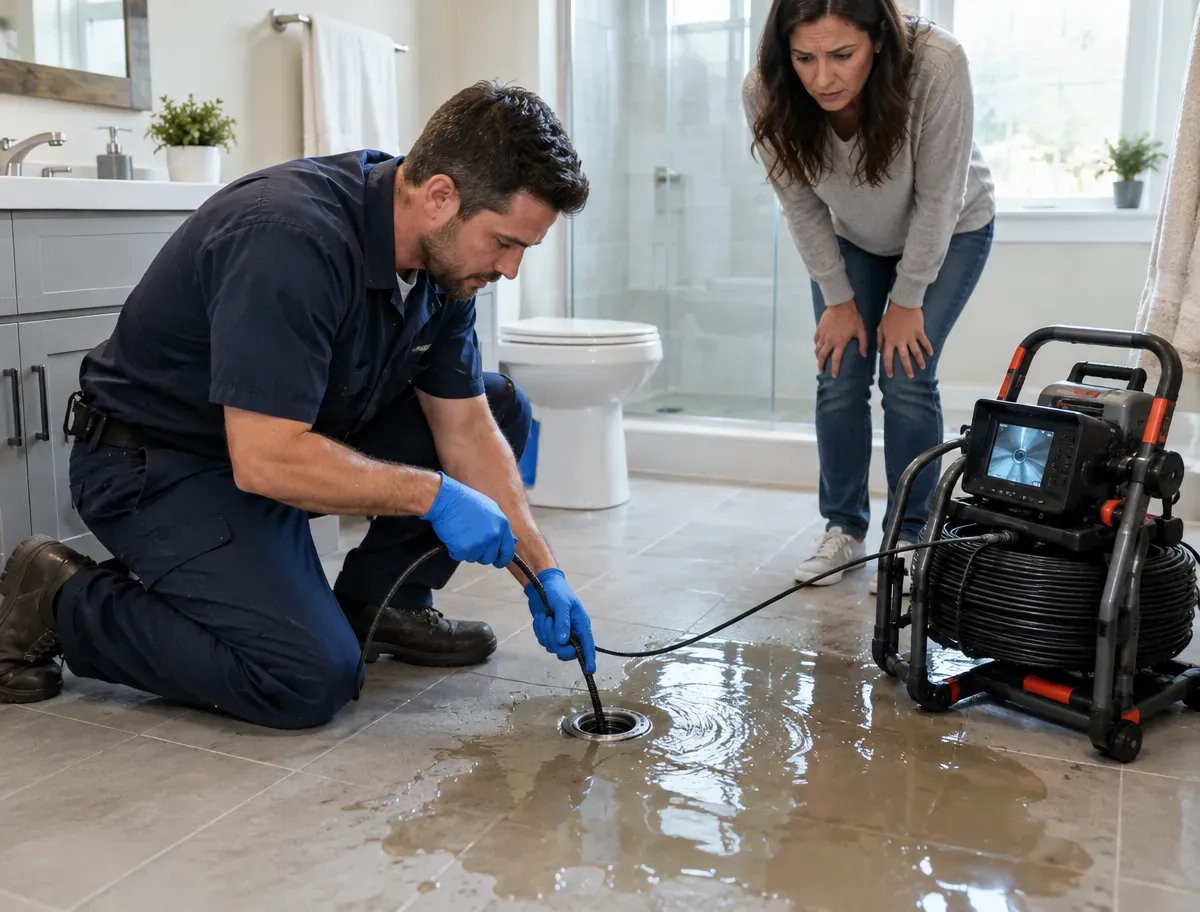
Sewer problems usually announce themselves before a full backup. Watch for:
- Several slow or clogged drains at once, rather than a single sink or tub.
- Gurgling sounds from toilets or drains, especially when another fixture is running.
- Wastewater backing up into the lowest drains, such as a basement floor drain, shower, or tub.
- Sewer odors inside the house or in the yard.
- Soggy or unusually green patches of lawn along the sewer line’s path.
What Does a Gurgling Drain Actually Mean?
Gurgling means air is being pushed through the water in a drain trap because flow downstream is restricted. One gurgling sink may be a local issue, but gurgling across multiple drains points to the main sewer line.
Why Does Wastewater Back Up Into Tubs and Floor Drains?
When the main line is obstructed, wastewater has nowhere to go and rises out of the lowest open drain in the home. That creates a health hazard and property damage risk that gets worse with every flush or load of laundry, so it is a reason to call for service right away. Prodigy offers 24/7 emergency sewer and drain service in Nashville for backups that can’t wait.
Seeing More Than One Slow Drain? Don’t wait for a backup. Prodigy Sewer & Drain includes a free camera inspection with any booked repair or service, so you see the inside of your line before deciding anything. Schedule your sewer service online.
How Do You Build a Preventive Sewer Maintenance Routine?
A good routine combines everyday habits with periodic professional service. Sewer utilities follow structured operation and maintenance programs, as reflected in the EPA’s CMOM program self-assessment checklist, and the same idea works on a smaller scale for a single home.
Which Everyday Habits Protect Your Sewer Line?
- Put cooking grease and oils in the trash, not down the sink.
- Flush only toilet paper; “flushable” wipes, paper towels, and hygiene products belong in the trash.
- Use sink strainers in the kitchen, tubs, and showers.
- Know where your sewer line runs before planting trees or large shrubs nearby.
- Know where your cleanout is so a technician can access the line quickly.
What Belongs in a Professional Maintenance Plan?
Prodigy’s sewerage maintenance service combines several services, each matched to what the camera shows:
- Camera inspection: a CCTV drain camera inspection by NASSCO PACP-certified technicians, with a recorded video and written condition report.
- Drain and main line cleaning: professional drain cleaning to remove buildup before it hardens into a blockage.
- Hydro jetting: high-pressure hydro jetting that scours grease, roots, and scale from the full pipe wall when the line is sound enough.
- A preventive recommendation: a suggested jetting frequency or inspection interval based on your line’s condition.
How Often Should Sewer Lines Be Inspected and Cleaned?
| Home Type | Suggested Cleaning Interval | Notes |
|---|---|---|
| Older Nashville homes with cast iron lines | Every 18–24 months | Corroded interiors collect buildup faster |
| Newer homes | Every 2–3 years | Adjust if roots or grease show up on camera |
| Home with recurring backups or known roots | Set after a camera inspection | Interval depends on severity |
| Buying a home | Camera inspection before closing | Reveals pipe material and condition up front |
These intervals are general guidance; the right schedule for your home depends on what a camera inspection shows. If you are buying a house, a sewer scope inspection before a home purchase is one of the best ways to avoid inheriting a failing line.
What Should You Know About Nashville Permits and Compliance?

Routine cleaning and camera inspections generally don’t involve permits, but some sewer work may, such as new connections, taps, or replacing a service line. Requirements depend on the scope of the job and on where you live, since surrounding cities such as Franklin, Brentwood, and Spring Hill have their own utilities and codes. Metro Water Services’ water and sewer permits page lists permit request forms and contact information for its Permits Department, and Spring Hill’s municipal code sets out its own requirements for connection of water and sewer service.
Before approving a repair, ask your contractor whether the job needs a permit or inspection and who will obtain it. Requirements can change, so confirm them for your specific address and project.
How Do You Choose the Right Sewer Repair Approach?
The right repair depends on the condition of the pipe, not just the price. Every decision should start with a camera inspection that shows the pipe material, the failure point, and whether the line is still structurally sound. Prodigy’s sewer and drain services include traditional excavation and trenchless options such as cured-in-place pipe lining, pipe bursting, and sectional spot repair.
| Factor | Traditional Excavation | Trenchless Repair |
|---|---|---|
| Yard and driveway disruption | Trench along the line | Small access points, minimal digging |
| Typical timeline | Often several days | Often faster, sometimes a single day |
| Pipe condition needed | Any condition, including collapsed lines | Host pipe must be suitable for lining or bursting |
| Expected life | Depends on the new pipe material | Many liners are designed for a service life of up to 50 years |
A collapsed or back-pitched line usually still requires excavation, while a cracked but stable pipe is often a good candidate for lining. Our comparison of pipe lining vs. pipe bursting explains how the two main trenchless methods differ.
Pricing note: Any sewer maintenance or repair costs discussed here are general guidance only. Actual costs vary based on line length, depth, pipe material, access, and the repair method, and pricing can change at any time. Contact Prodigy Sewer & Drain for a current, accurate quote. Our trenchless sewer repair cost guide for Nashville explains the main cost factors.
What Should You Ask Before Approving a Sewer Repair?
- Can I see the camera footage and the written condition report?
- Does the proposed method fix the root cause, or just clear a symptom?
- Is my pipe a candidate for trenchless repair, and why or why not?
- Does this job need a permit or inspection, and who will handle it?
- What warranty applies to the work and to the materials?
Frequently Asked Questions
Who is responsible for the sewer line on my Nashville property?
In general, the private sewer service line (building lateral) that runs from your home to the public main is the property owner’s to maintain. Where your responsibility ends can vary, so confirm the details with your local utility.
How often should I have my sewer line inspected and cleaned?
Older Nashville homes with cast iron lines often benefit from cleaning every 18 to 24 months, and newer homes every 2 to 3 years. A camera inspection helps set the right interval, and one is especially worthwhile before buying a home.
What are the warning signs of a sewer line problem?
The most common signs are several slow drains at once, gurgling toilets or drains, backups in the lowest drains, and sewer odors. Soggy patches of lawn along the line can also point to a leak.
Do I need a permit for sewer line repair in Nashville?
It depends on the work and your location. Routine cleaning generally doesn’t need one, but new connections or line replacement may require permits and inspections, so confirm with your contractor and local utility before work begins.
Can every sewer line be repaired with trenchless methods?
No. A camera inspection decides. Cracked but stable pipes are often good candidates for lining, while collapsed or back-pitched lines usually still need excavation.
TL;DR — Homeowner’s Guide to Sewer Maintenance at a Glance
- The private sewer lateral from your home to the public main is generally yours to maintain.
- Several slow drains, gurgling, low-drain backups, and odors are signs of a main line problem.
- Keep grease and wipes out of drains, and schedule camera inspections and cleaning: about every 18–24 months for older cast iron homes, 2–3 years for newer homes.
- Some sewer work may need permits; confirm requirements for your address and project.
- Next step: book a camera inspection and maintenance visit with Prodigy Sewer & Drain.
Get a Free Sewer Maintenance Quote
A little routine care keeps a Nashville sewer line flowing for years: know what you own, watch for warning signs, protect the line with good habits, and let a camera guide every cleaning and repair decision. Prodigy Sewer & Drain’s certified technicians can inspect your line, set a maintenance schedule, and recommend repairs only when the footage shows they are needed.