What Does FOG Compliance in Nashville Require? Keeping Grease Lines Clear in Metro Nashville & Mt. Juliet
Quick Answer: FOG compliance in Nashville is set by Metro Water Services’ Fats, Oils and Grease Management Policy (Operational Division Policy No. 2004-01, Revision No. 3, effective October 1, 2024). Food service establishments must pump grease interceptors at least every 90 days unless the department approves otherwise, clean grease traps at least every 30 days, have their grease control equipment certified every year by a Metro-certified inspector, and keep maintenance records for at least three years. Mt. Juliet runs its own FOG program through its Public Works Department with similar certification and record rules.
Grease is one of the most common reasons a busy kitchen line backs up in the middle of service, and it is the reason Metro Nashville and Mt. Juliet both run FOG programs. This guide is for restaurant owners and kitchen managers who want the rules in one place: what Metro Nashville and Mt. Juliet require, what paperwork to keep, and how to keep the lines between your sinks and the interceptor flowing, especially heading into the holiday rush.
What Are Nashville’s FOG Compliance Rules?
Metro Water Services runs the FOG program for Davidson County through its Environmental Compliance section. The governing document is the Metro Water Services FOG Management Policy, Operational Division Policy No. 2004-01, Revision No. 3, effective October 1, 2024. The policy was first adopted November 1, 2004.
The policy applies to any food service establishment (FSE), meaning any business or facility that prepares, serves, or makes food available. Single-family homes are excluded. Commercial property owners are ultimately responsible for discharges from their tenants, so landlords of restaurant spaces have a stake too.
The table compares the main requirements in both jurisdictions, summarized from each city’s published policy.
| Requirement | Metro Nashville (MWS Policy 2004-01, Rev. 3) | Mt. Juliet (Public Works FOG Policy) |
|---|---|---|
| Grease interceptor pumping | At least every 90 days unless approved; never less than every 180 days, even with an approved monitor and alarm | At least every 3 months unless approved by the department |
| The 25% rule | Full pump when grease and solids reach 25% of liquid depth | Full pump under the same 25% rule |
| Grease trap cleaning | At least every 30 days; every 2 weeks above 25% | At least every 2 weeks; weekly above 25% |
| Annual certification | Yes, by a Metro Water Services certified inspector (Form A or Form B) | Yes, by an approved inspector who passed the MWS or Mt. Juliet course |
| Record keeping | Maintenance records kept at least 3 years | Maintenance records kept 3 years, with hauler manifests |
| Food grinders / disposals | Prohibited unless fixed to a solids separator | Prohibited in commercial establishments |
Requirements can change, and the department can set a different schedule for your site. Confirm your current interval with the city before changing your pumping routine.
Who enforces Nashville’s grease trap rules?
Metro Water Services inspectors enforce the policy. Noncompliance is handled under the Metro Sewer Use Ordinance and the FOG Management Policy Enforcement Response Guide, which starts with a Non-Compliance Notice for first or isolated issues and escalates from there. Enforcement actions can be appealed to the Waste Water Hearing Authority.
How Does the Restaurant Grease Ordinance Work?
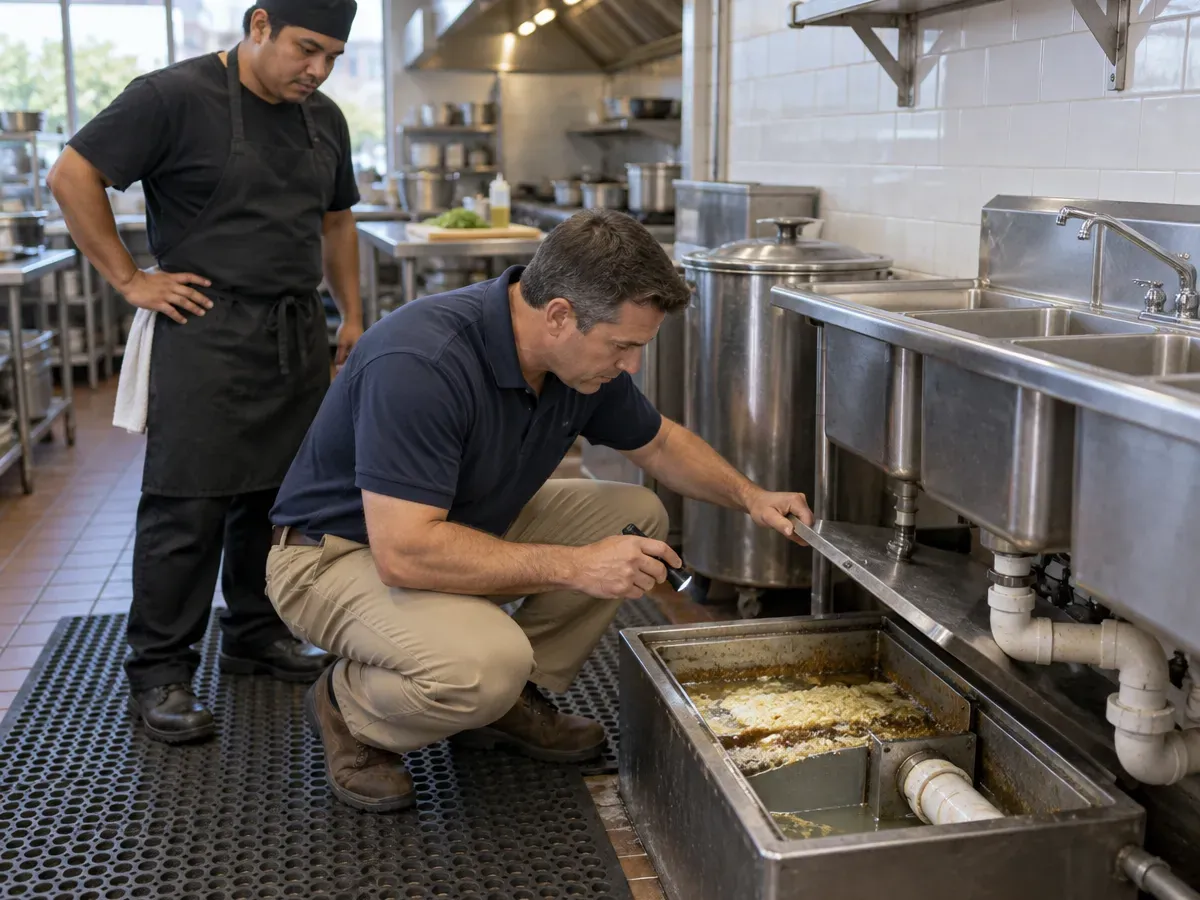
The rules stack in layers. The EPA’s National Pretreatment Program sets the federal framework that lets cities control what nonresidential users send into the sewer. Metro Code Title 15.60, the Sewer Use Ordinance, applies that locally, and Section 15.60.125 requires every food service establishment to comply with the FOG Management Policy. Grease matters because it hardens into blockages, and the EPA lists blockages among the causes of sanitary sewer overflows.
For a restaurant, the ordinance turns into a repeating cycle:
- Apply before you open. New establishments complete Metro’s Sewer Discharge Compliance Application, and a FOG plan must be approved before grease control equipment is installed.
- Pump on schedule. An approved grease waste hauler pumps the full contents of the interceptor or trap on the required interval, and you keep the manifest.
- Certify every year. A Metro-certified inspector checks the equipment and completes Form A (interceptor) or Form B (trap).
- Repair what fails. Missing or broken parts such as tees or baffles get fixed, and the repair is documented.
- Keep three years of records. Logs, manifests, certifications, and repair records stay on hand for inspectors.
Metro’s grease management page has the current policy, both certification forms, the approved inspector list, a cleaning log form, and the best management practices poster in several languages.
How do I prepare for a Metro Water Services inspection?
Kitchens get into trouble when records are scattered across filing cabinets and email threads. Keeping the pumping log and signed hauler paperwork together makes an inspection quick. A simple routine works:
- Store every pumping manifest in one binder near the grease interceptor.
- Log each service date, hauler name, and gallons removed right after pumping.
- Schedule regular commercial drain cleaning so lines stay clear between pump-outs.
Holiday Rush Coming Up? Fryers and roasting pans run hardest between Thanksgiving and New Year. Book grease line jetting before the busy weeks, with off-hours and overnight scheduling available. Call Prodigy at (615) 914-7349.
How Does Mt. Juliet’s FOG Program Compare?
Mt. Juliet is outside Metro Water Services, so restaurants there answer to the City of Mt. Juliet Public Works Department’s Pretreatment Division. The Mt. Juliet Fats, Oils & Grease Management program is based on Chapter 30 of the city code, and the detailed rules are in the Mt. Juliet FOG Management Policy.
The structure mirrors Metro’s, with a few differences. Grease traps must be cleaned at least every two weeks instead of every 30 days, and the minimum trap size is a 20 gallon per minute / 40 pound capacity unit. Certification forms go to Mt. Juliet Public Works rather than Metro. The city’s pretreatment documents page lists the Grease Control Permit Application, both certification forms, and the Mt. Juliet approved grease waste hauler list.
How Do I Keep Grease Lines Clear?
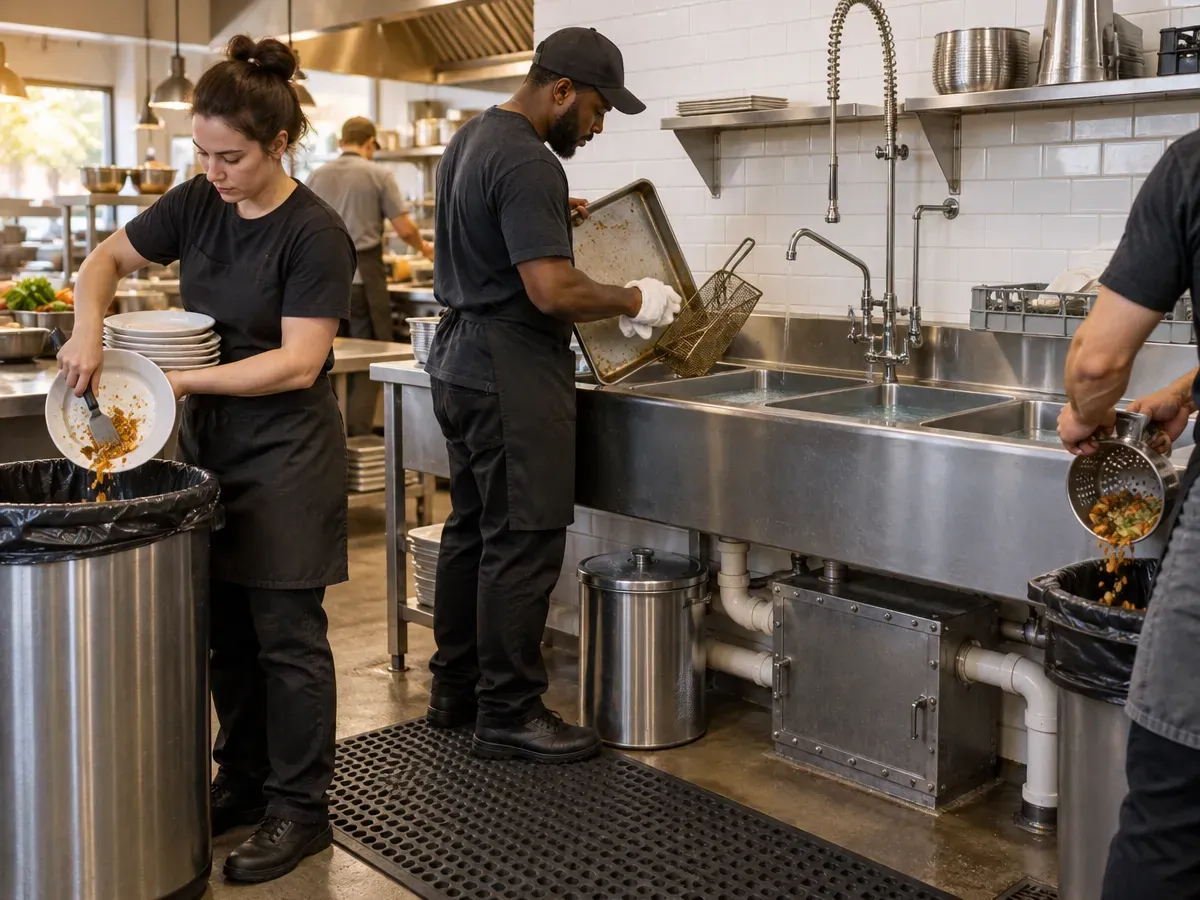
Compliance starts before grease reaches the drain. Metro’s grease control best management practices and Mt. Juliet’s program list the same core habits:
- Dry wipe pots, pans, and plates before they go to the dish station.
- Recycle used cooking oil in a grease recycling bin instead of pouring it down any sink, floor drain, or mop sink.
- Post “NO GREASE” signs above sinks and on the front of dishwashers.
- Use sink strainers and remove garbage disposals connected to the sewer.
- Train every new hire, since turnover is when bad habits come back.
Pumping empties the interceptor, but it does nothing for the grease that coats the pipe between your fixtures and the tank. That is where hydro jetting comes in. A high-pressure water stream scours grease, sludge, and debris off the full inner wall of the pipe and restores the full diameter instead of punching a narrow hole through a clog.
What is the best way to remove hardened grease from drain lines?
Hydro jetting removes hardened grease that cable machines leave behind. A camera goes in first to locate the buildup and confirm the line can take the pressure, the nozzle and pressure are matched to the pipe and deposit, and a post-jet camera pass confirms the wall is clean. Every booked job includes a free camera inspection, and the footage gives you a record of the line’s condition for your compliance file.
How often should Nashville restaurants schedule drain cleaning?
There is no single interval for line cleaning. Most restaurants and grease-handling businesses benefit from annual or scheduled jetting, and the right schedule depends on how the line behaves, your menu, and your volume. Our commercial sewer maintenance schedule for Nashville properties covers the year-round plan; for restaurants, Prodigy also offers monthly or annual service contracts.
What if grease buildup has already damaged the pipe?
Grease itself does not crack pipes, but repeated clogs often point to structural problems. Roots, offset joints, and corrosion create rough surfaces where grease builds up faster. Where the pipe is a candidate, CIPP lining creates a smooth, jointless pipe inside the old one that restores flow without excavation, and a camera inspection shows whether lining, a point repair, or replacement fits.
What Are the Signs of Grease Line Failure?
Grease line trouble usually shows up as slow drains and bad odors before it becomes a full backup. Catching it early keeps the kitchen open.
What does a failing grease line smell like?
A rotten-egg or rancid-fat smell rising from floor drains points to decomposing grease trapped in the pipe. The smell often gets stronger during peak hours, when hot water pushes gases up through the drains, and it can drift into the dining room.
How fast does a grease line clog escalate?
It tends to happen in stages. Sinks drain slower than normal, then drains gurgle when other fixtures run, and finally wastewater backs up through floor drains during a busy service. Once those signs start, a partial clog can turn into a full blockage quickly.
Prodigy is licensed, insured, and bonded and offers 24/7 emergency response for Nashville restaurant backups, with a camera inspection to find the exact blockage before recommending a repair.
Frequently Asked Questions
How often must I pump my grease interceptor in Nashville?
Metro Water Services’ FOG policy requires interceptors to be pumped at least once every 90 days unless the department approves otherwise. With an approved monitoring device and alarm the interval can be longer, but never less often than once every 180 days. A full pump is also required when grease and settled solids reach 25% of the interceptor’s liquid depth.
How often do grease traps need cleaning in Nashville?
Under the Metro policy, grease traps must be cleaned at least every 30 days, and every two weeks if grease and food solids exceed 25%. Mt. Juliet’s policy is stricter for traps, with cleaning at least every two weeks.
Who can certify my grease interceptor or grease trap?
In Metro Nashville, only a Metro Water Services certified inspector who has passed the department’s course can complete the annual certification on Form A (interceptor) or Form B (trap). In Mt. Juliet, the inspector must have passed the Metro Water Services or Mt. Juliet Public Works course, and the form goes to Mt. Juliet Public Works.
How long do I need to keep grease trap records?
Both the Metro Nashville and Mt. Juliet policies require food service establishments to keep grease control equipment maintenance records for three years. Each hauler manifest should show the cleaning date, the company, and the gallons removed.
What happens if a restaurant falls out of FOG compliance?
Metro Water Services handles noncompliance through its FOG Enforcement Response Guide. First or isolated issues are met with a Non-Compliance Notice, and repeated problems can escalate to a Notice of Violation, a compliance order with penalties, and the Waste Water Hearing Authority. Outcomes depend on the facts of each case.
TL;DR — FOG Compliance in Nashville at a Glance
- Metro Water Services’ FOG Management Policy (No. 2004-01, Rev. 3, effective October 1, 2024) governs every Nashville food service establishment.
- Metro requires interceptor pumping at least every 90 days unless approved, and grease trap cleaning at least every 30 days.
- Mt. Juliet runs its own program through Public Works, with trap cleaning at least every two weeks.
- Both require annual certification by a certified inspector and three years of maintenance records.
- Pumping empties the tank; hydro jetting clears the grease coating the lines in between.
- Next step: call Prodigy at (615) 914-7349 to schedule grease line jetting and a camera inspection.
Get a Free Commercial Grease Line Cleaning Quote
Staying FOG compliant comes down to a steady pumping schedule, good kitchen habits, and clean lines between the fixtures and the interceptor. Prodigy handles the line side with commercial hydro jetting and camera inspections across Metro Nashville and Mt. Juliet, scheduled around your service hours.